Jiuquan Travel Guide: Ancient Silk Road City Meets Modern Punk Art
At the foot of the Qilian Mountains lies Jiuquan (酒泉), a city where ancient history and modern creativity collide. Known in classical Chinese poetry as a frontier stronghold, Jiuquan is also emerging today as China’s unexpected “punk capital,” boasting avant-garde desert art installations and abandoned cinematic oil towns.
This unique blend of Silk Road heritage, diverse ethnic cultures, and futuristic desert art makes Jiuquan one of the most fascinating destinations in Northwest China.
Natural Beauty: 70% of Gansu’s Scenery in One City
Jiuquan is often said to contain 70% of Gansu’s most beautiful landscapes, offering travelers a sweeping variety of terrain:
Haerteng Grasslands – Endless green pastures dotted with yurts, perfect for experiencing nomadic culture.
Sugan Lake – A sapphire-blue alpine lake that mirrors the vast sky.
Yinda Wetlands – Famous for their purple-red hues at sunset, creating a painter’s dream.
Desert Plains & Poplar Forests – Stark contrasts of life and desolation, showcasing the grandeur of Northwest China.
Cultural Treasures: From Grottoes to Ancient Passes
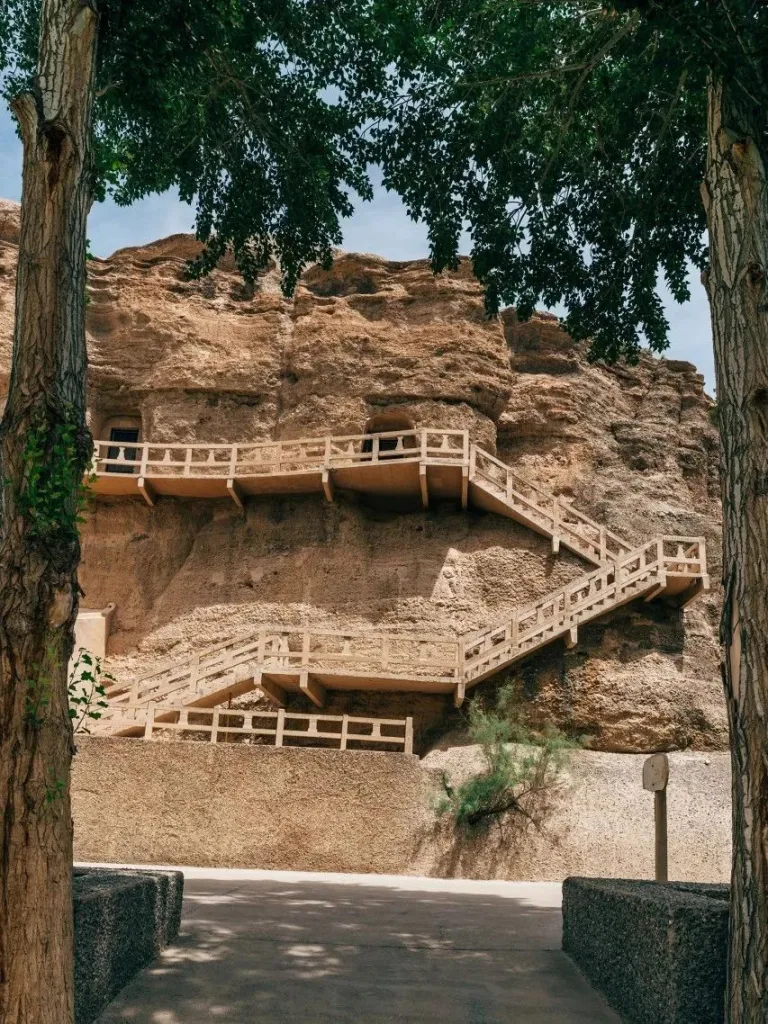
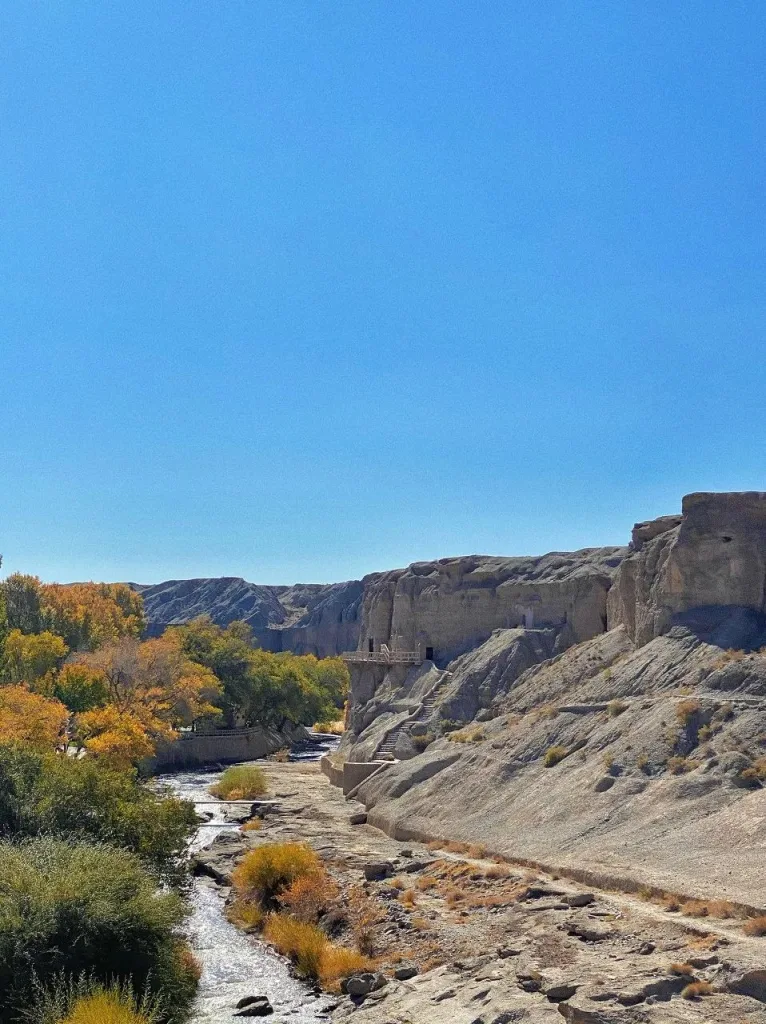
The Yulin Grottoes (榆林窟)
Located in Guazhou County along the Yulin River Valley, the Yulin Grottoes are home to breathtaking Buddhist statues and mural paintings. Here, flowing river valleys meet timeless cave art, creating what’s often described as “the most beautiful natural mural along the Hexi Corridor.”
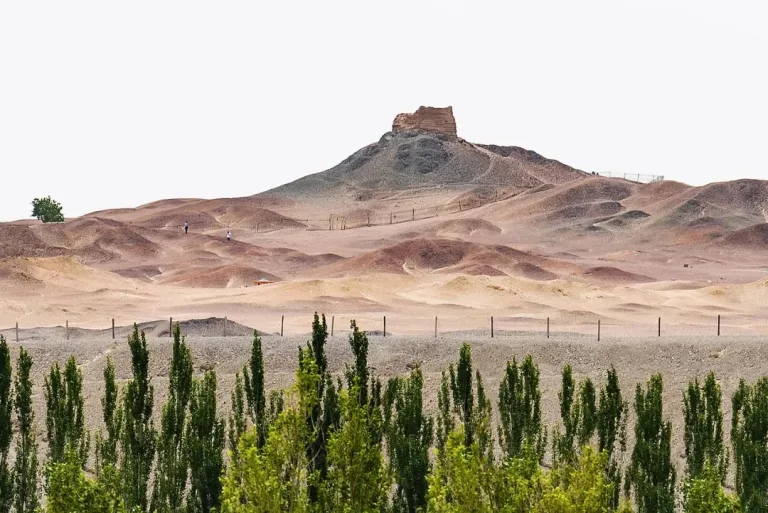
Yumen Pass (玉门关)
Once a vital checkpoint on the ancient Silk Road, Yumen Pass was named for the jade transported through its gates. Today, the ruins of the city walls stand in the Gobi Desert, surrounded by vast, windswept landscapes. This desolate yet majestic site reflects the hardships and grandeur of Silk Road journeys.
Modern Punk Spirit: Art in the Desert
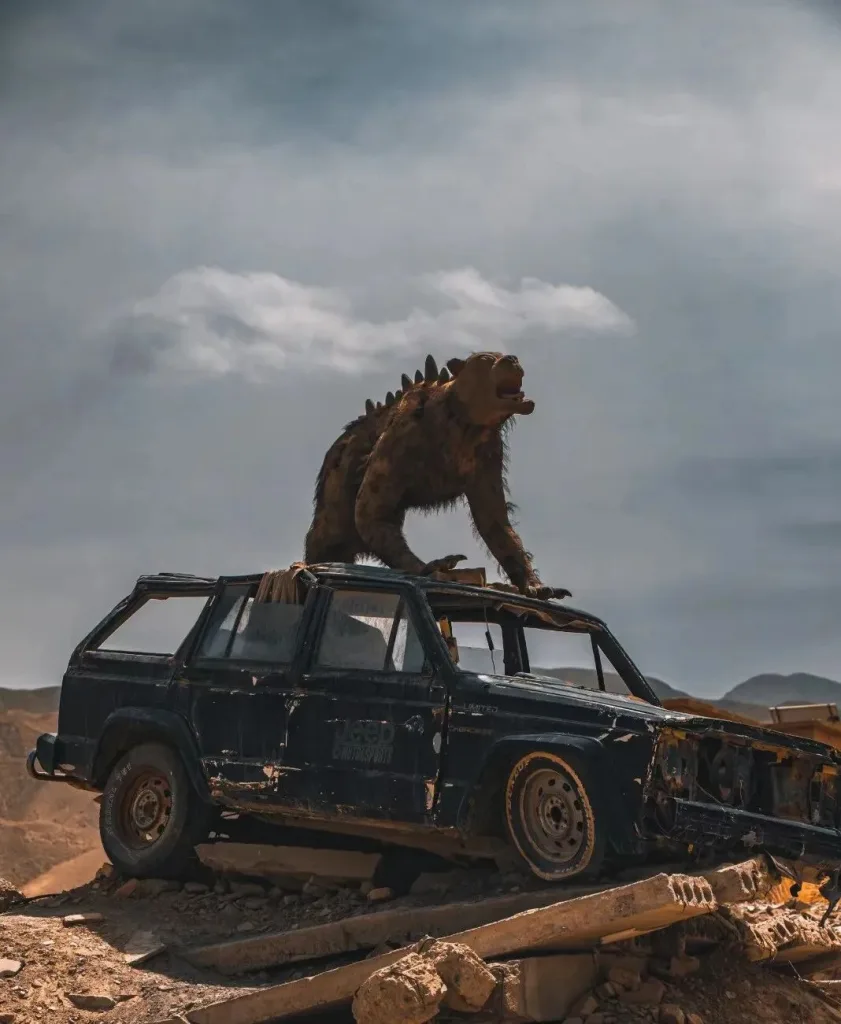
Akse Oil Town (阿克塞石油小镇)
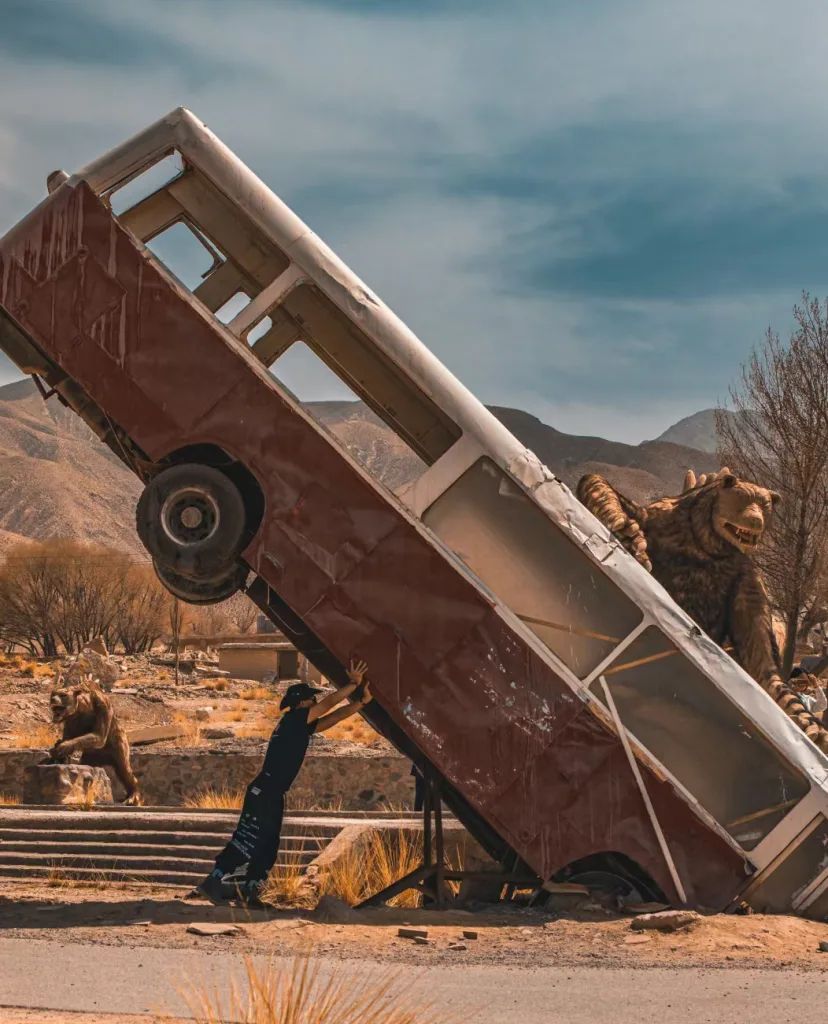
Known as the filming location for The Nine-Towered Demon Pagoda, Akse Oil Town is an eerie yet fascinating place. Abandoned factories, vehicles, and ruins give the area a cinematic, post-apocalyptic feel. Visitors often describe it as a “punk desert town” where industrial remnants meet wild imagination.
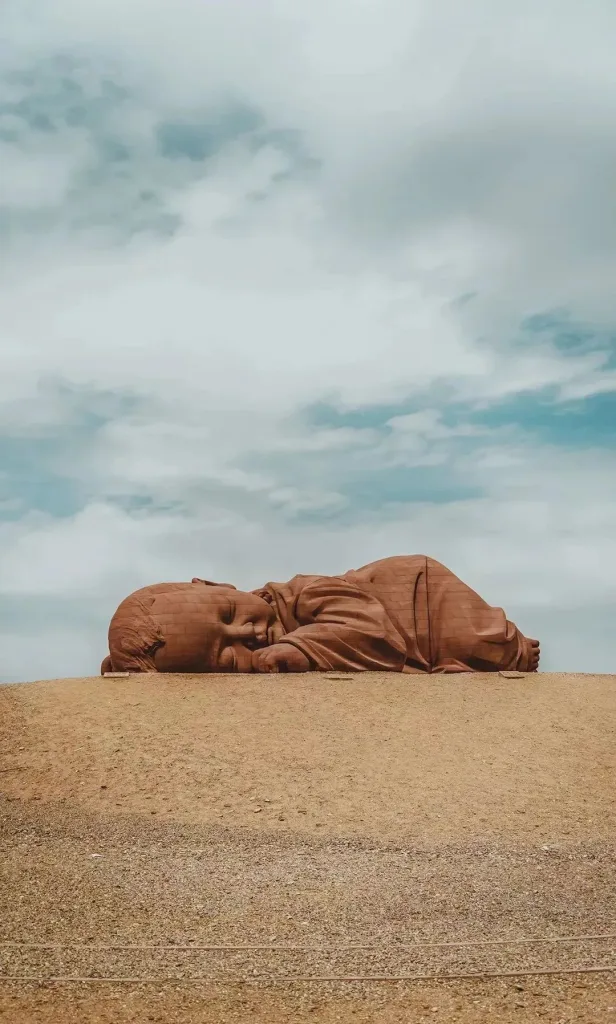
The Son of the Earth (大地之子)
Created by Professor Dong Shubing of Tsinghua University, this monumental art piece lies quietly in the desert. The reclining figure blends seamlessly with the landscape, symbolizing harmony between humanity and nature.
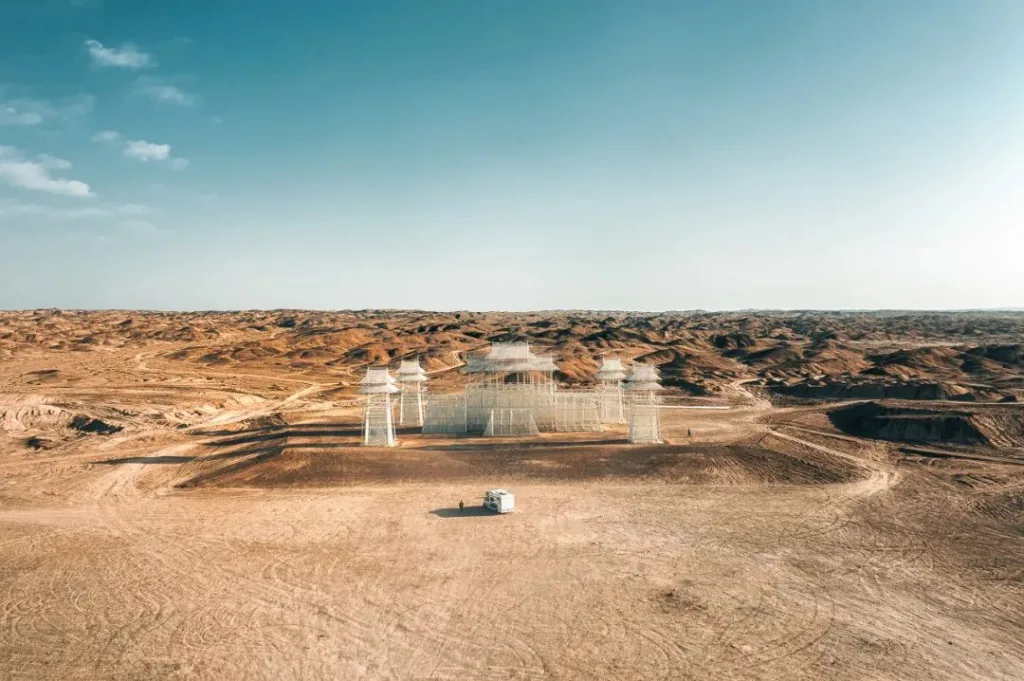
“Unbounded” Steel Sculpture
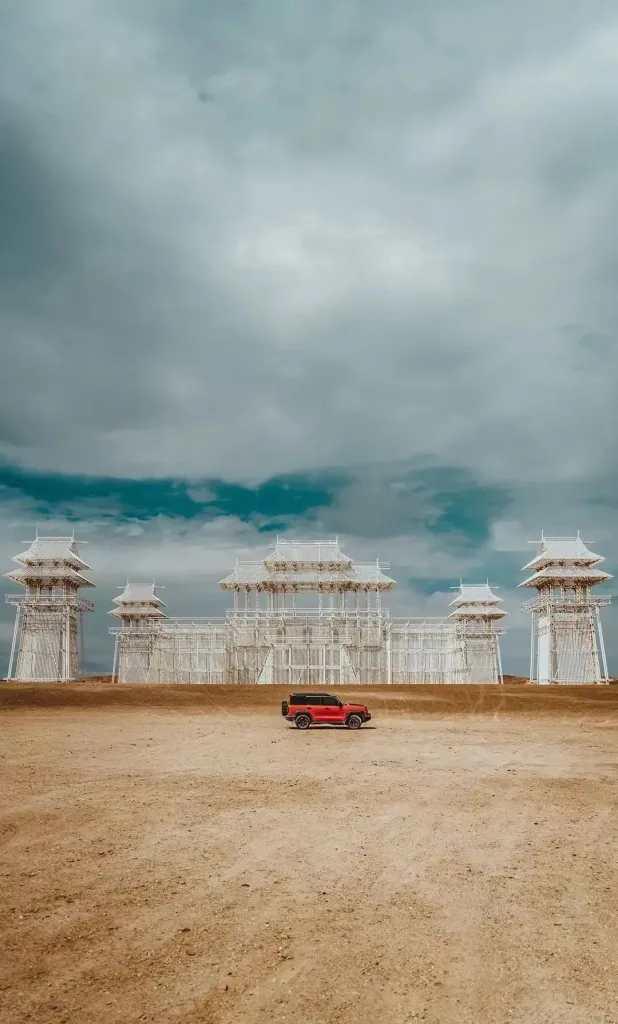
Another creation by Professor Dong, this futuristic steel installation stands on the plateau like a desert mirage. Its surreal presence makes it one of Jiuquan’s most photographed landmarks.
Together, these works of art give Jiuquan its reputation as China’s “punk capital”, contrasting sharply with its ancient Silk Road heritage.
Travel Tips for Visiting Jiuquan
Best Time to Visit: Spring (April–June) and autumn (September–October) offer the most pleasant weather. Summers can be hot, while winters are cold and dry.
How to Get There: Jiuquan is accessible by train and bus from major Gansu cities like Lanzhou, Jiayuguan, and Dunhuang. The nearest airport is Jiayuguan Airport, about an hour’s drive away.
Recommended Stay: 2–3 days to explore both natural and cultural highlights.