
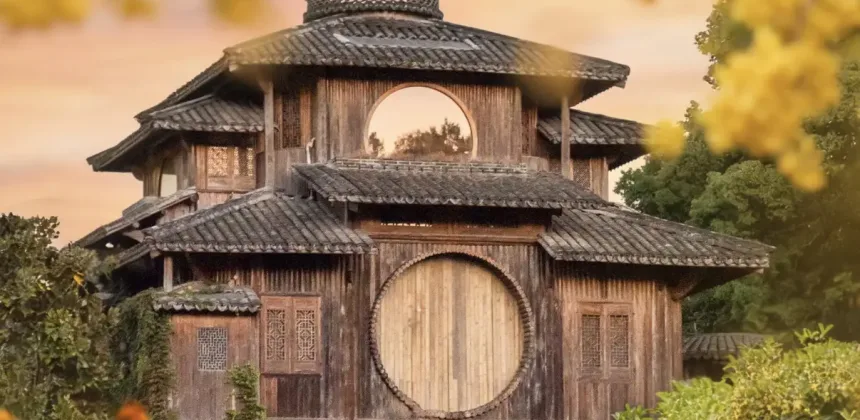
Hangzhou’s 2026 Osmanthus Bloom Is Almost Here: My Full October Walking Route (And the One Café Not Worth the Hype)
Hi everyone this is Skye. A couple of autumns ago our team went up to Shangtianzhu Temple for a work outing — a bit of incense-burning, a bit of sightseeing, the usual company-trip routine. Walking through the temple grounds I caught a thin trace of osmanthus in the air. Not a wave of it, just enough that I stopped and sniffed twice to make sure I wasn’t imagining it.
Honestly, that’s the most Hangzhou-osmanthus thing that could’ve happened. Some years the flowers are shy like that — you catch a hint if you really lean in for it, but it never quite gets to the point where the whole street smells sweet. Blame the weather. When summer drags on too hot for too long and then flips cold all at once, the trees get tricked into opening their first batch early, sometimes right around National Day (Oct 1st), instead of easing into it properly.
Here’s the part that actually matters for planning, though: osmanthus in Hangzhou doesn’t do “one big bloom and done.” It comes in batches — a first round, a quiet stretch, then a bigger round once the nights start getting properly cold. So there’s no single “perfect weekend” to nail. It’s more of a window, usually late September into late October, sweetest days generally somewhere in the first half of October. I say “generally” because it moves around every year — I always end up checking the week’s rain forecast and how wide the day/night temperature swing is getting right before I go, since that’s the real tell, not a date on a calendar.
Is it too early to be writing this in July? Maybe. But I’d rather hand you the route now than have you scrambling for it in October when everyone’s googling the same thing at once. Good things are worth planning for early — by the time it’s “peak season,” you should already know where you’re headed.

written by Skye
Senior Travel Planner | Local China Expert
Updated 2026.07.15
The Best Time to See Osmanthus in Hangzhou
If you take away one thing: stop hunting for a single “perfect day.” Late September through late October is the general window, sweetest stretch usually the first half of October. Because the blooms come in waves, going a little “too early” by most people’s standards still gets you plenty of scent — and a noticeably thinner crowd, which matters more than you’d think once you’ve seen Manjuelong on a Saturday.
The Classic Route: Jiuxi -> Li'an Temple -> Qianlong Road -> Yangmeiling Village -> Manjuelong
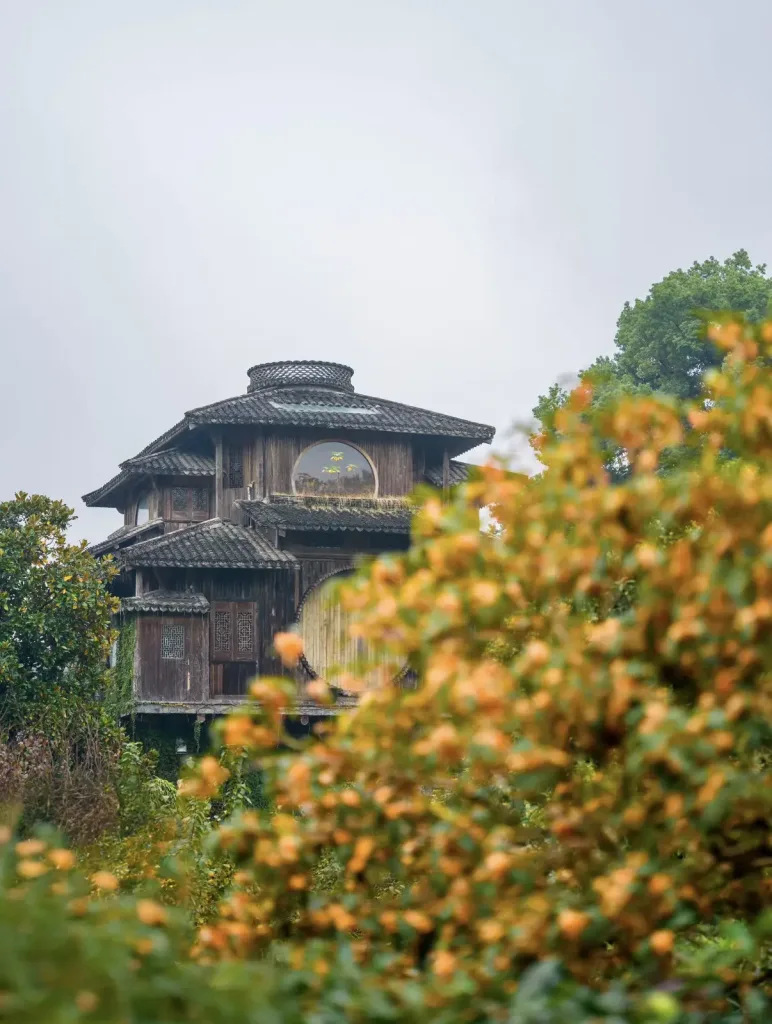
If it’s your first time chasing osmanthus here, this is the route I send people on. It’s not a hidden gem — it’s basically the route, the one every local already knows — but it’s well-trodden for a reason. Good scenery the whole way, food and drink stops built in, and it ends at Manjuelong, still the city’s best-known osmanthus spot. Rare varieties cluster there thick enough that locals just call it a “waterfall of osmanthus” — walk into it and you’ll get why this spot made it onto West Lake’s “New Ten Scenes” list, under the name Man Long Gui Yu (“Cassia Rain at Manjuelong”).
Getting there without a car: Metro Line 3 to Huanglong Cave (Huanglongdong) Station, then Bus 103 to the Jiuxi scenic area entrance. Don’t feel like walking the whole thing? There’s a shuttle at the entrance, ¥8/person, scan to pay onboard — ask for the two-stop “Jiuxi Yanshu” ticket, it drops you right at Yangmeiling. The route is beginner-friendly, with mostly gentle paths and some gradual uphill sections around Qianlong Road, so it’s genuinely not a hard walk if you do it on foot — cool breeze, faint osmanthus in the air the whole time, it goes by fast.
Stop 1: Jiuxi Yanshu (Nine Creeks Misty Trees)
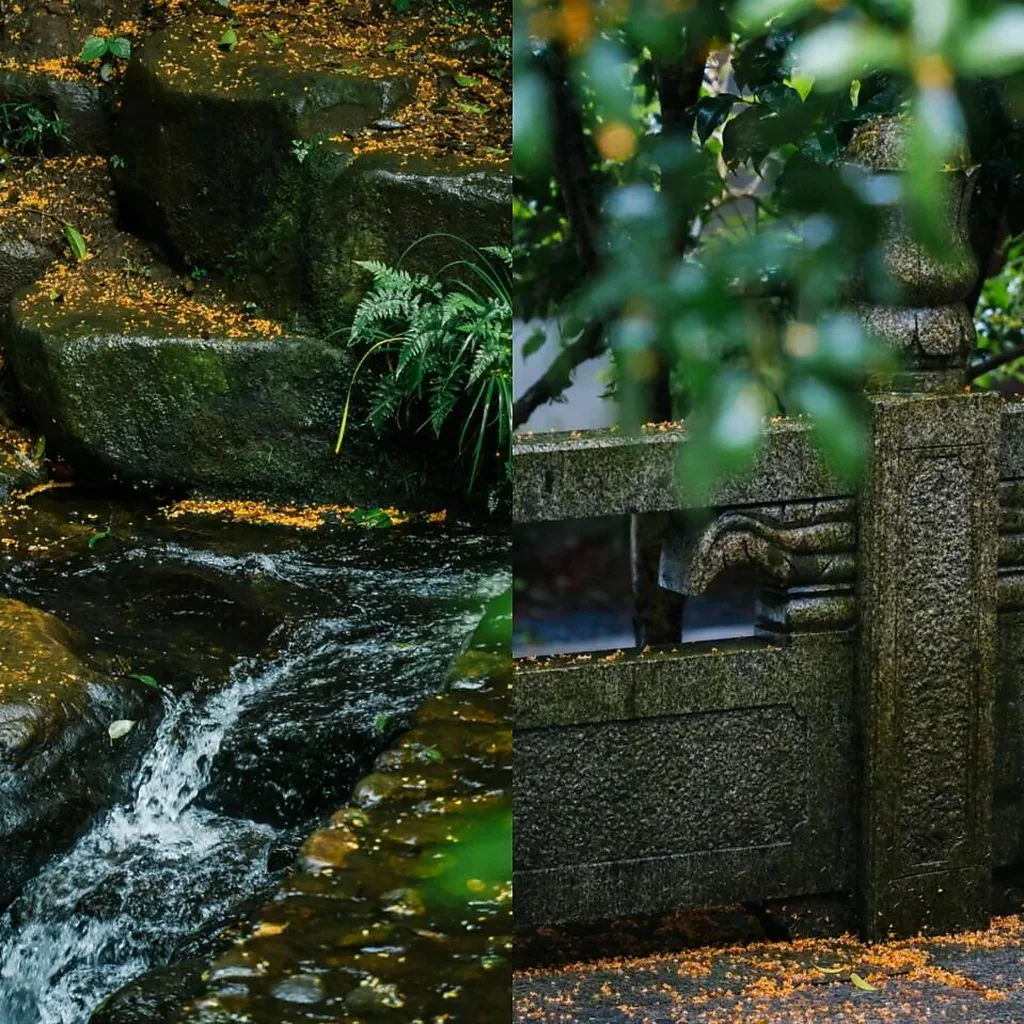
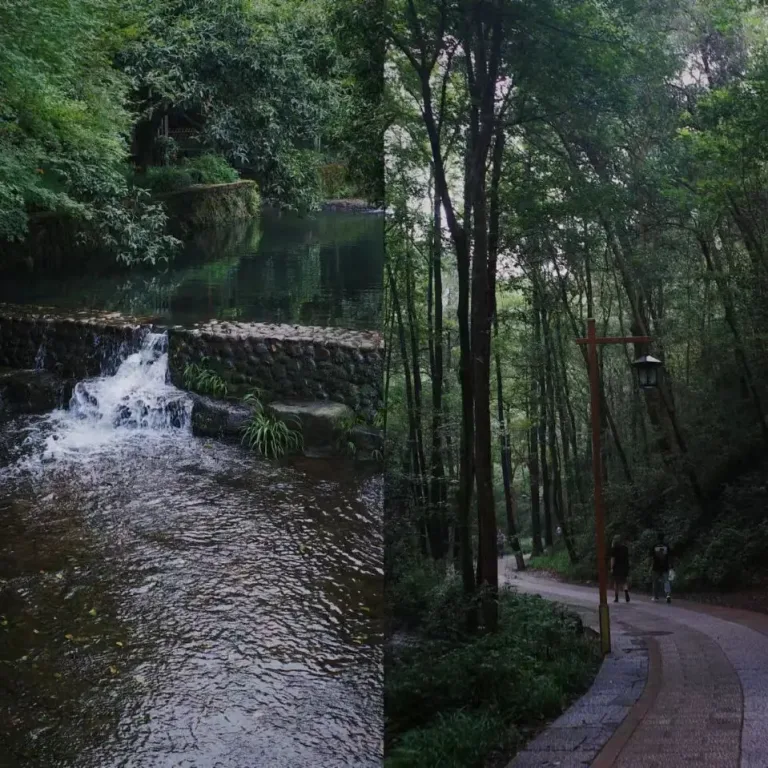
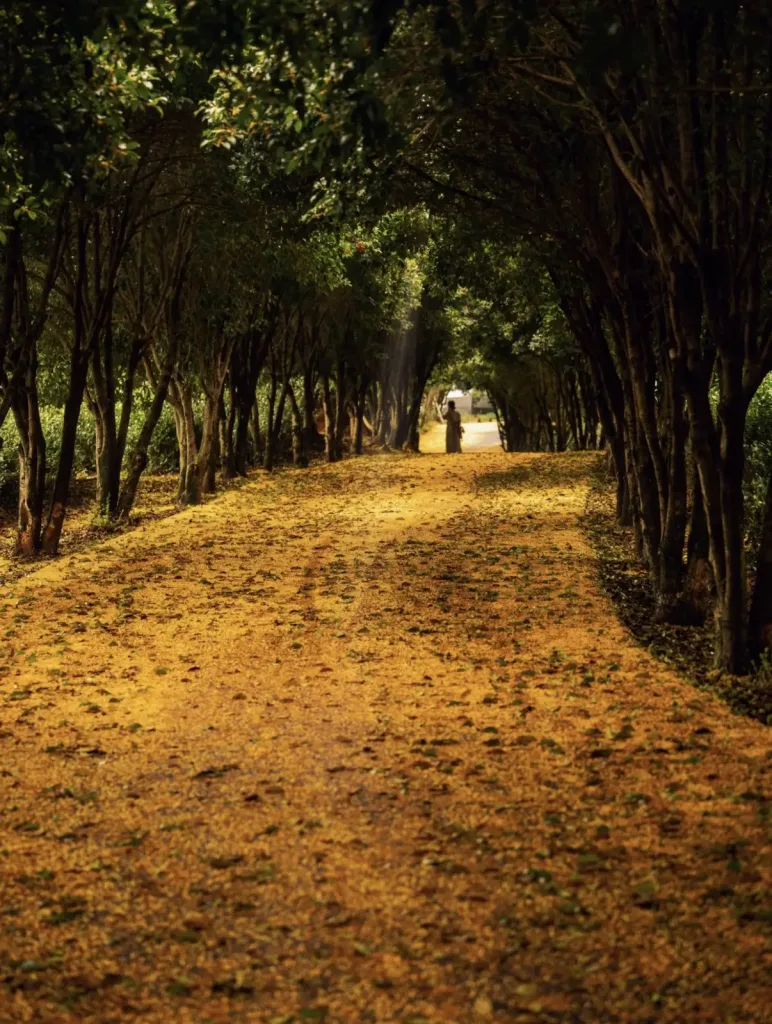
This place is kind of a shape-shifter. Summer, it’s where everyone comes to cool off in the water. Autumn, it flips into a red-maple-and-osmanthus double bill. Genuinely, most of what makes Hangzhou pretty shows up somewhere on this trail at some point in the year — it earned its “New Ten Scenes” title honestly. The path doesn’t feel manicured either, more like you wandered into a forest than a tourist attraction — trees packed tight on both sides, a stream running alongside, osmanthus clustered in little groups the whole way. After it rains, gold petals collect on the water’s surface, and that alone might be my favorite five seconds of the whole walk.
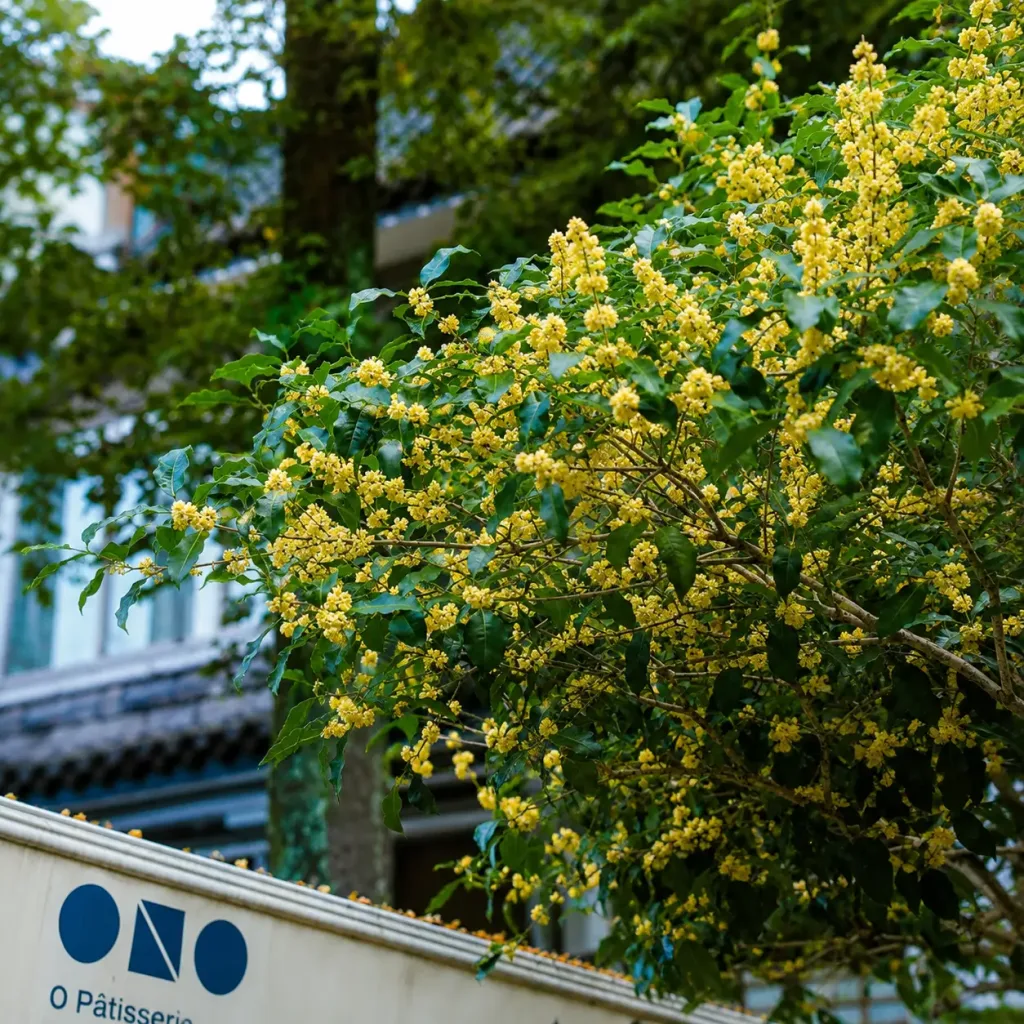
Don’t stress if you miss the very first blooms — Hangzhou’s osmanthus opens in stages across the whole city, not all at once, so the scent just keeps building day by day.
Stop 2: Li'an Temple
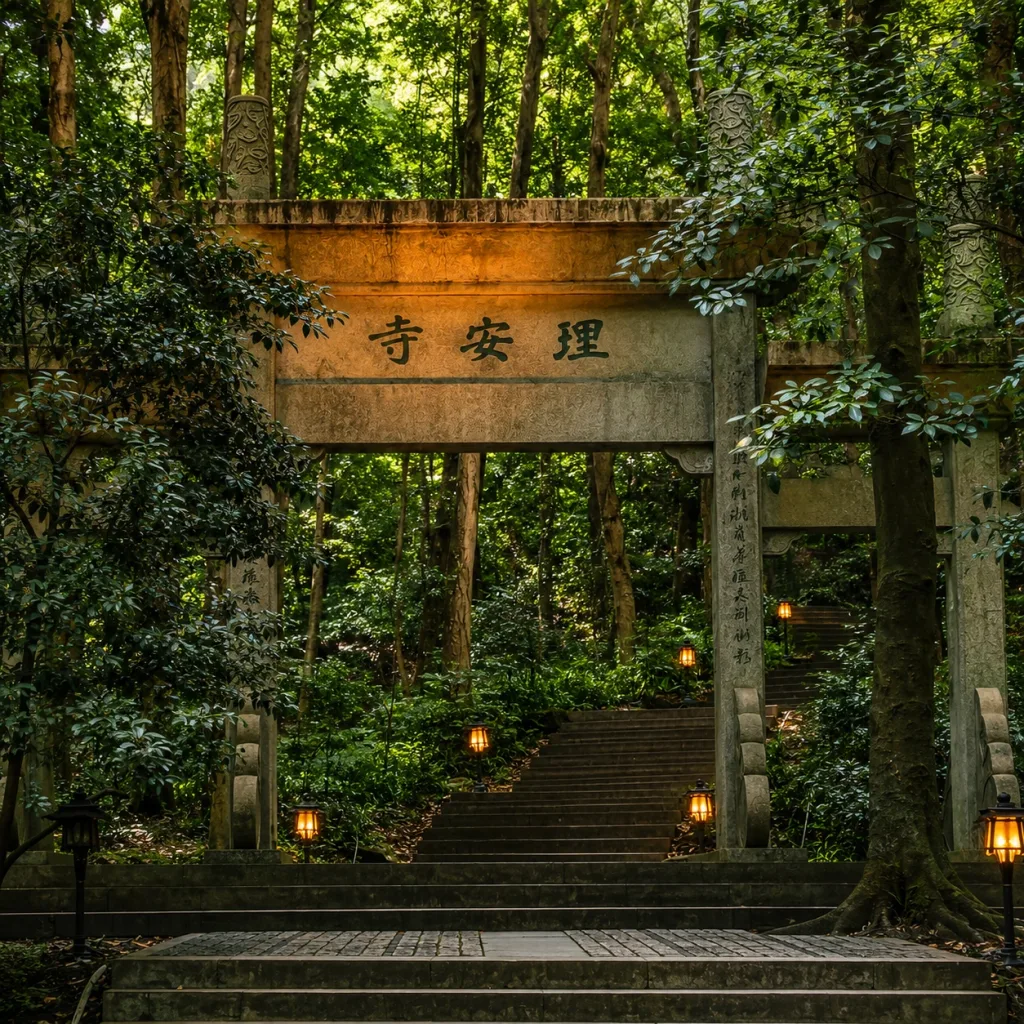
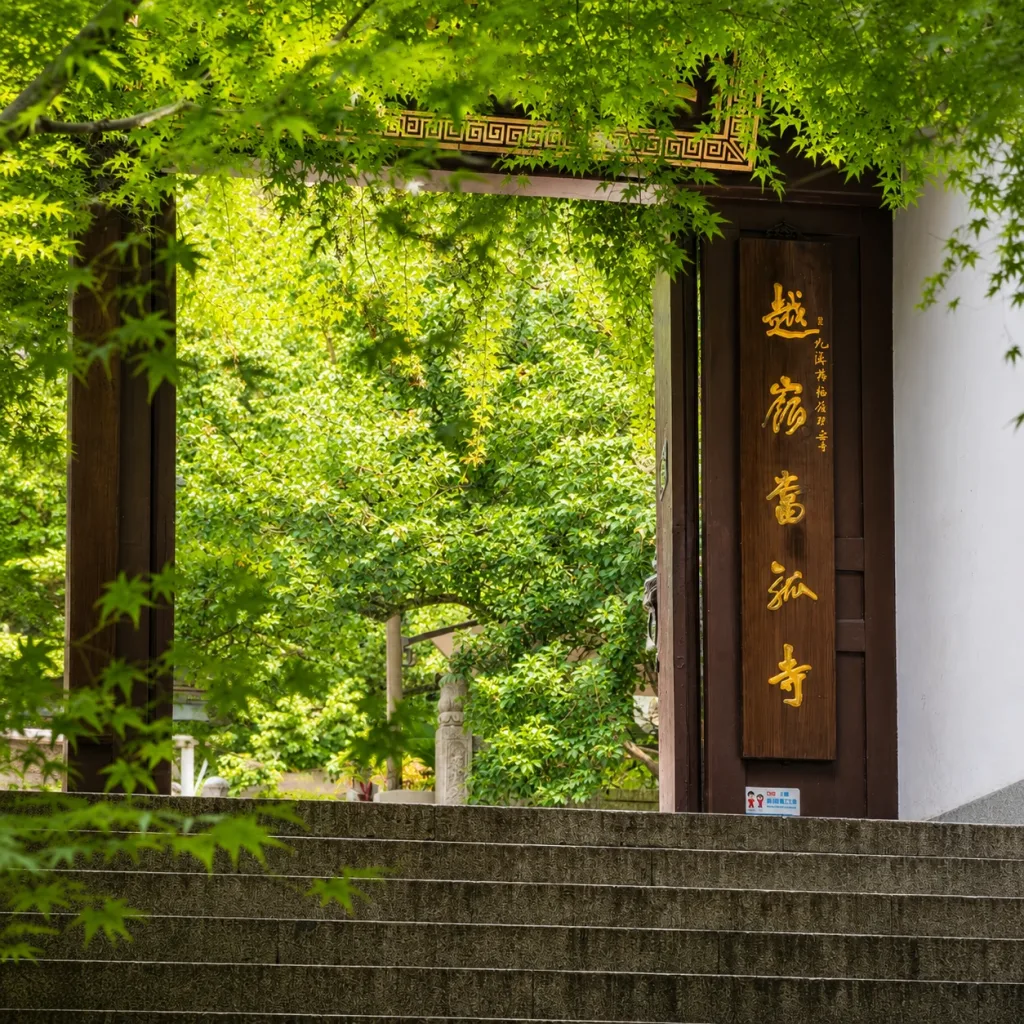
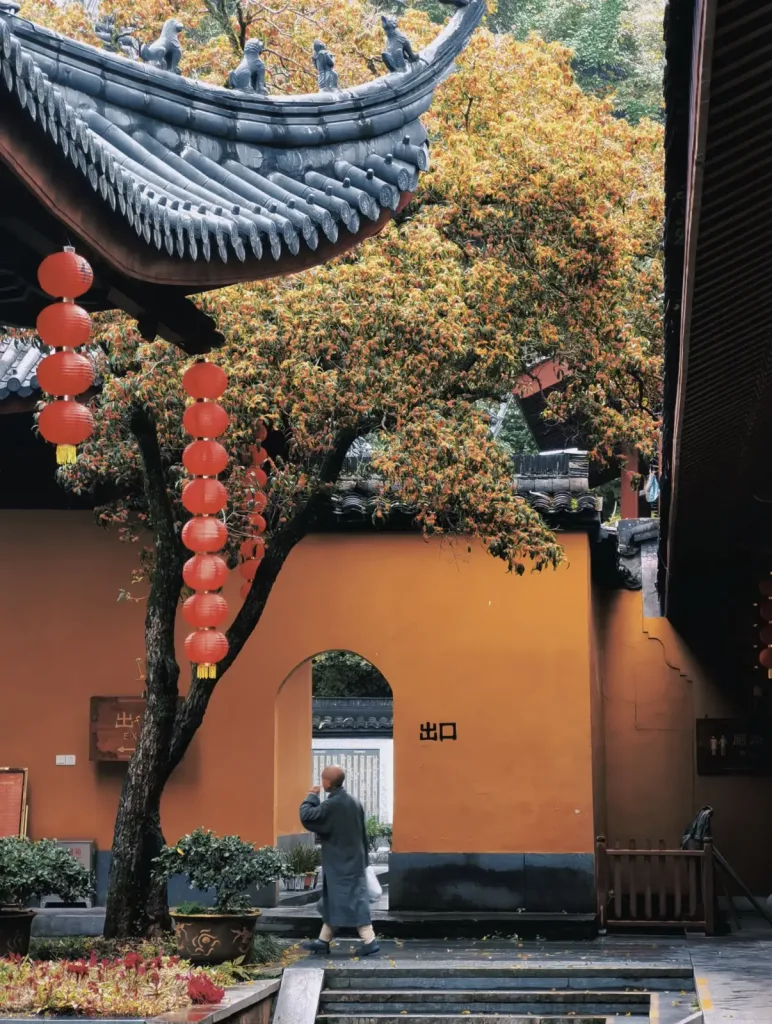
Keep going upstream along Jiuxi onto Qianlong Road and you’ll hit a quiet, genuinely old temple tucked into the shade — Li’an Temple. (Heads up: you can’t go inside right now.)
It used to be called Yongquan Chan Temple, or Fayu Temple, named after a spring on the grounds that used to be an attraction in its own right. Old osmanthus trees ring the place, thick with scent — it’s got that “deep courtyard, hidden path” feeling you’d expect from a poem, not an actual place you can walk to. These days the building’s a restaurant, but it’s still a nice spot to eat with osmanthus in the air.
Stop 3: Qianlong Road
Qianlong Road connects Jiuxi to Yangmeiling Village, about 1.5km, running from Jiuxi Road up to Manjuelong Road — and it’s honestly a well-known hiking route on its own, not just a pass-through.
Between Li’an Temple and Yangmeiling, hills stack up on both sides with tea gardens tucked in between and little springs running through, making that faint trickling sound the whole way. Every bend hands you a new view — which, if I had to sum up Hangzhou in one phrase, that’d probably be it.
Stop 4: Yangmeiling Village
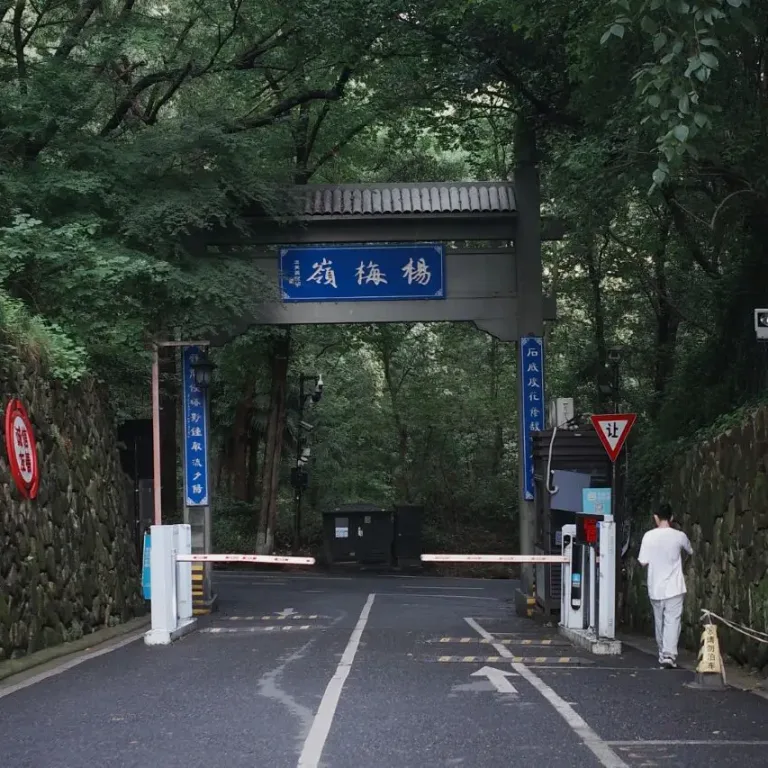
Yangmeiling sits right next to Li’an Temple, and you have to pass through it to get to Manjuelong — it’s actually where Jiuxi creek starts. Hills on all sides, shaded, quiet, a stream running through it year-round.
The name’s got more history than I expected. Everyone knows Yangmeiling now for its Dragon Well (Longjing) tea, but the name itself is older than the tea — old records mention the area being named after a variety of waxberry (“golden granny waxberry”) that used to grow here, which makes it the only village in the entire West Lake scenic area named after a fruit tree. The waxberry groves mostly got wiped out over the years, especially through wartime. It wasn’t until 2006 that the village replanted over 1,200 waxberry trees and got its “waxberry flavor” back, so to speak.
Tea’s the other half of the story. Yangmeiling’s Lion Peak (Shifeng) Longjing has real credentials — local lore says the monk Biancai brought tea cultivation over from the temples around Shangtianzhu. Because Yangmeiling sits right next to Li’an Temple, tea planting spread into the village as far back as the Ming dynasty, and it’s still one of the village’s biggest draws today.
Walking through, you’ll see white walls and black tile roofs scattered across the hillside, no real grid to any of it, just settled in wherever made sense — and somehow that’s exactly what makes it look right. Between the osmanthus and the tea gardens, every step through here looks like it belongs in a painting, not gonna lie. There are a few teahouses if you want to sit down, plus guesthouses and home-style restaurants if you’re hungry.
Stop 5: Manjuelong
Out of Yangmeiling you hit Manjuelong Road — Bus 87 runs along it if you’d rather ride, or keep walking, which is what I did. It’s mostly downhill from here and not far at all. Just watch for cars and stay to the side.
With my stays in Hangzhou for more than 5 years, Manjuelong’s become one of my spots. I know it’s crowded. I know osmanthus is everywhere in this city come fall, so Manjuelong isn’t “special” in that strict sense. But skipping it every year still feels like I’d be missing something, and I can’t fully explain why.
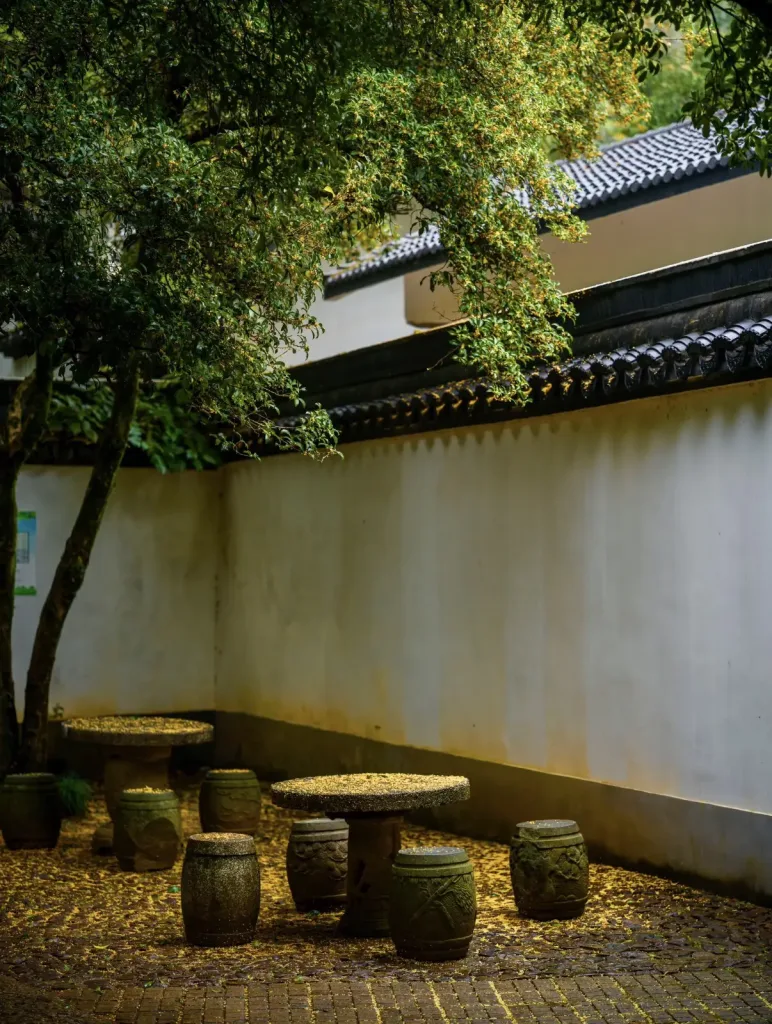
When I actually went to scout this, I was a little early — hadn’t quite hit peak yet. Friends who’d gone a couple days before me said they could already smell it faintly along the road. Look up and you’ll spot osmanthus tucked into the branches even before the trees are fully open; once the bigger trees do open, you won’t need to look for it at all, just follow whoever’s got their phone out.
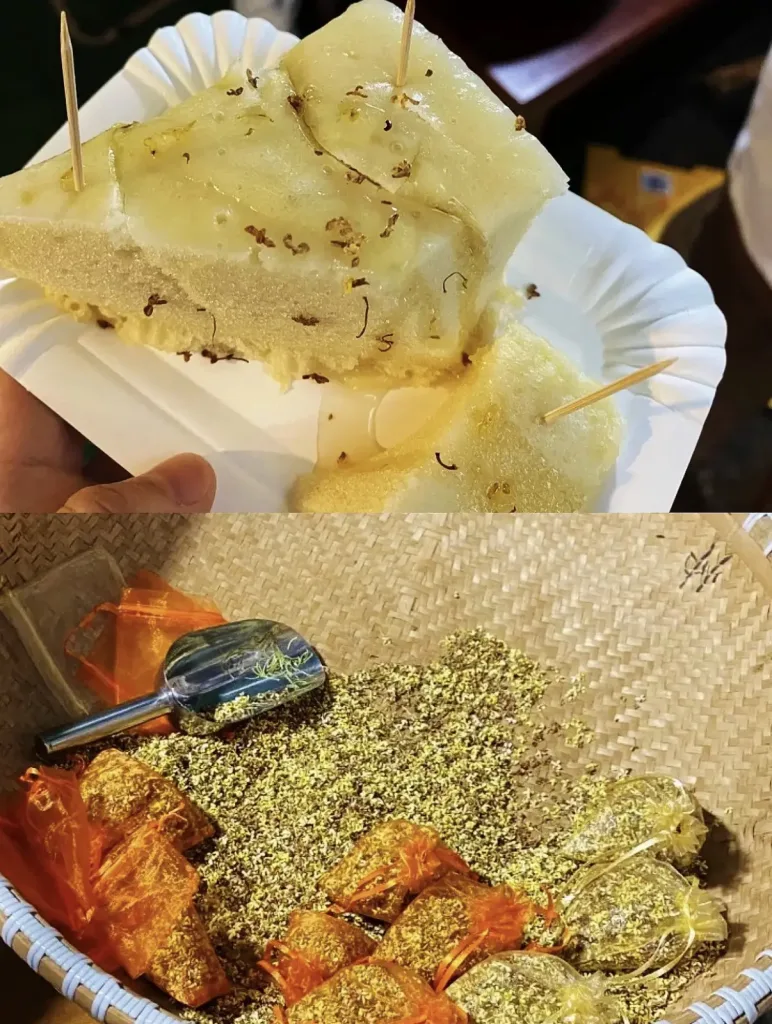
Manjuelong also gets busier than the rest of the route because of the small stalls that pop up on both sides during the season — osmanthus everything, plus jewelry, fans, bracelets. Between the people looking at flowers, the people shopping, and the cars trying to squeeze through, it gets tight. But I’ve made my peace with that — once the osmanthus opens, the whole city shows up together, and there’s something kind of nice about that, honestly.
Real talk on the coffee: after the walk I stopped at FORMHER COFFEE, right off the main road — it’s got a bit of a reputation online so I wanted to check it out myself. Got the osmanthus Longjing cold brew. Looked great, tasted pretty average for what it cost, and the place was packed with people there for photos, not the coffee. I wouldn’t build a special stop around it — go if you’re already right there and need to sit down, don’t go out of your way for it.

Alternative Osmanthus Routes (If You Want to Skip the Crowds)
Manjuelong’s the headline act, but it’s not the only place in the city to catch osmanthus. A few quieter options if crowds really aren’t your thing:
- Kids’ Park Route: Hangzhou Children’s Park → Hangzhou Zoo → Hupao Park
- South Shore West Lake Route: Jingci Temple → Long Bridge → Xueshi Park → Qianwang Temple
- North Shore Route: Hangzhou Botanical Garden → Hangzhou Flower Garden → Solitary Hill (Wenlan Pavilion) → Manao Temple
- Cloud & Shadow Three Temples Route: Lingyin Temple → Yongfu Temple → Fahai Temple
FAQ: Hangzhou Osmanthus Season
When is the best time to see osmanthus flowers in Hangzhou?
Late September through late October, generally, with the sweetest days usually clustering in the first half of October. It shifts year to year with the weather, so I’d check closer to your actual travel dates rather than locking in one weekend months out.
Where is the best place to see osmanthus in Hangzhou?
Manjuelong, hands down — it’s got the densest cluster of rare varieties and it’s the spot that gave West Lake’s “New Ten Scenes” one of its names. The Jiuxi–Li’an Temple–Qianlong Road–Yangmeiling–Manjuelong walk strings together several good viewing spots in one trip.
How do I get to Jiuxi by public transport?
Metro Line 3 to Huanglong Cave (Huanglongdong) Station, then Bus 103 to the Jiuxi scenic area entrance. There’s also a ¥8/person shuttle at the entrance if you don’t want to walk it all.
Is Manjuelong worth visiting despite the crowds?
For a first trip, yes. Nowhere else in the city has that concentration and variety of osmanthus. If crowds really aren’t your thing, go slightly before what most people consider “peak,” or try one of the alternative routes above.
Why is Hangzhou so famous for osmanthus?
It’s been tied to the city’s identity for centuries, especially around West Lake — spots like Manjuelong have been famous for generations for the way the fragrance takes over entire hillsides once the trees are fully open.
Final Thoughts
Planning a first trip to Hangzhou this fall? Routes like this one fill up fast once osmanthus is in full swing, and getting around by bus and on foot eats up more of a short trip than people expect. If you want help building an itinerary around it — or around the rest of the Yangtze Delta — reach out and we’ll put something together.