
Halal Food in China: A Muslim Traveler’s Guide to Eating Safely and Confidently
Planning a trip to China as a Muslim traveler? One of the first questions you may have is simple but important: Can I find halal food in China?
The answer is yes — but with some planning.
China is a vast country, and halal food availability changes a lot depending on the city, neighborhood, sightseeing route, and how strict your dietary requirements are. In cities such as Xi’an, Beijing, Guangzhou, Shanghai, and Hangzhou, Muslim travelers can usually find halal or halal-friendly options. But around small towns, ancient villages, mountain areas, theme parks, and some tourist attractions, meals may need to be arranged in advance.
This guide explains how halal food works in China, what “Qingzhen” means, which cities are easier for Muslim travelers, what foods to try, what ingredients to avoid, and how to plan a smooth Muslim-friendly China trip.

written by Bill
Senior Travel Planner | Local China Expert
Updated 2026.06.16
Is It Easy to Find Halal Food in China?
Halal food is not equally available everywhere in China.
In major cities, especially those with long-established Muslim communities or strong international business connections, Muslim travelers can usually find halal-friendly restaurants. These are often Chinese Muslim restaurants, Lanzhou beef noodle shops, Xinjiang restaurants, or restaurants near mosques and Muslim neighborhoods.
However, China is not like some Muslim-majority destinations where halal options are available everywhere. In many regular Chinese restaurants, pork, lard, alcohol-based sauces, or shared cooking equipment may be used. Even dishes that look vegetarian or seafood-based may not always be suitable for strict halal travelers.
For first-time visitors, the safest approach is to plan meals around your route instead of waiting until you are hungry near a tourist attraction. This is especially important if you are traveling with children, elderly family members, or a group with different dietary needs.
At Chinaloveforyou, we usually plan halal-friendly meals based on the actual sightseeing route. Instead of asking guests to travel far away just for lunch, we help arrange restaurants that fit the day’s timing, transportation, and comfort level.
What Does “Halal” Mean in China?
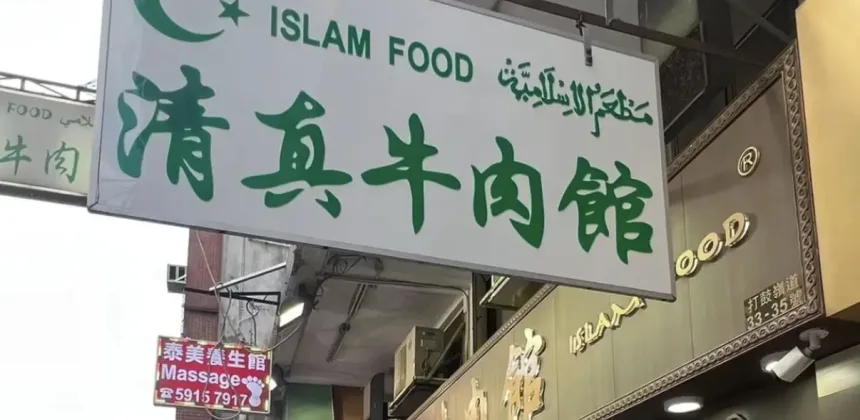
In China, halal food is usually referred to as 清真. You may see these Chinese characters on restaurant signs, food packaging, or menus.
Common signs to look for include:
- 清真
- 清真餐厅
Many halal-friendly restaurants in China use green signs, Arabic script, crescent symbols, or Chinese characters saying “清真.”
However, travelers should understand that not every restaurant has the same level of verification or certification. Some places are officially certified, while others are simply Muslim-owned or commonly chosen by local Muslim diners.
For this reason, it is better to use careful wording when planning a trip. Instead of assuming every place is “halal-certified,” we usually describe restaurants as:
- halal-friendly
- Muslim-friendly
- Qingzhen restaurants
If your halal requirements are strict, it is best to confirm the restaurant before visiting.
What Halal-Friendly Food Can You Try in China?
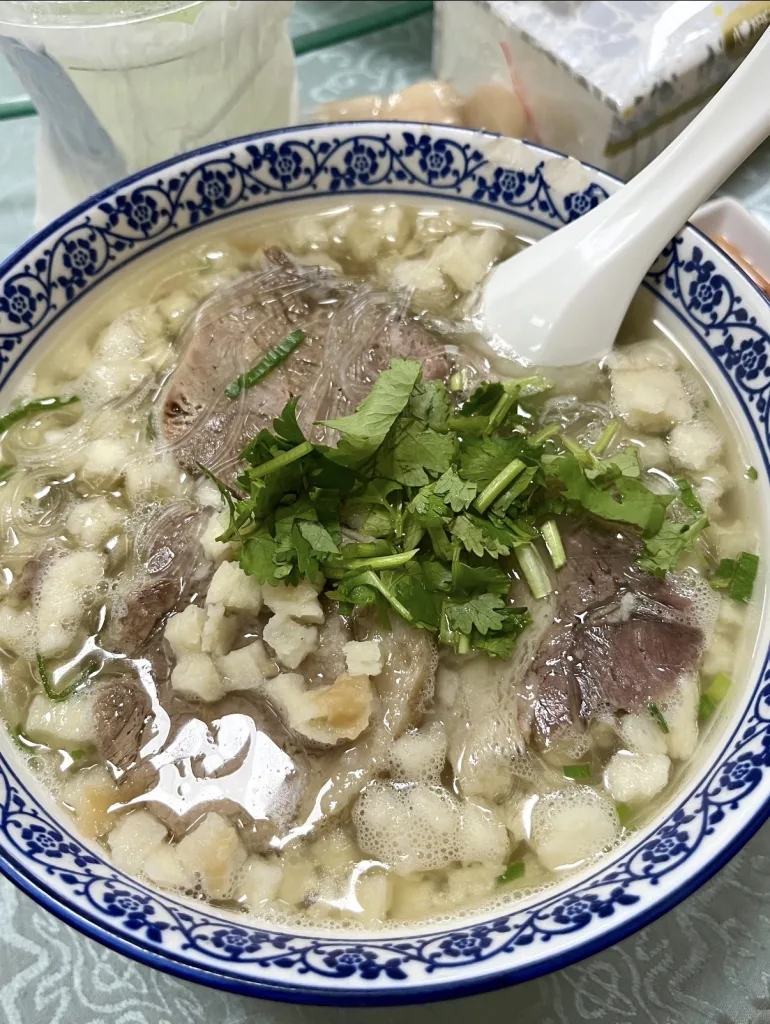
Lanzhou Beef Noodles
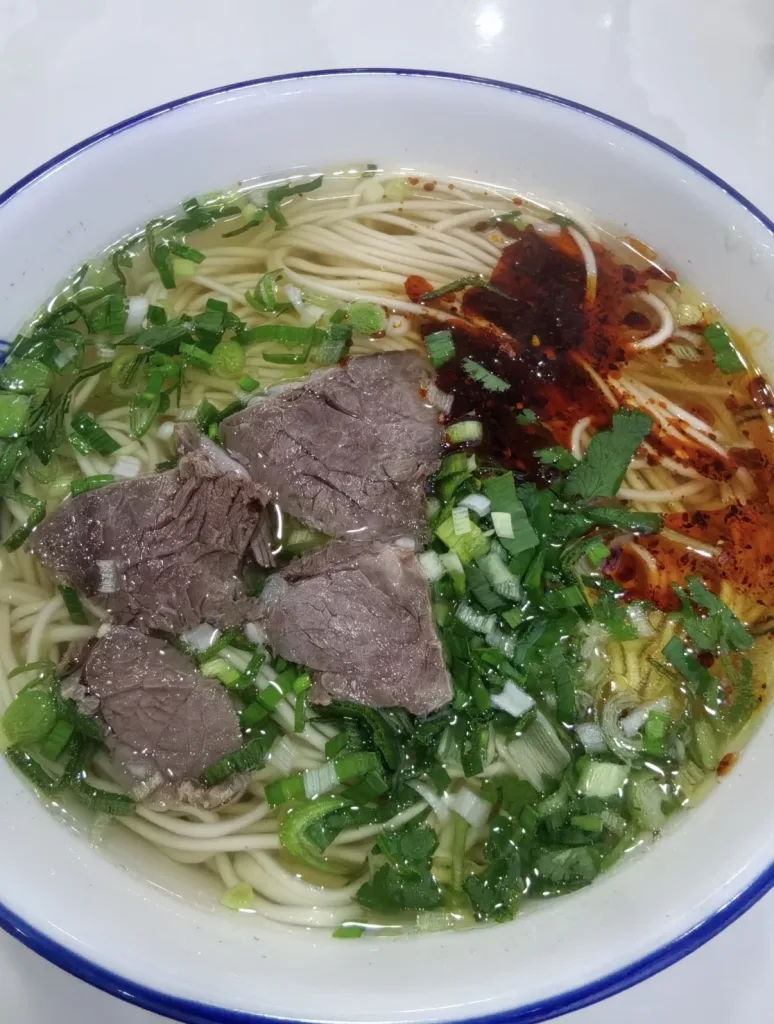
Lanzhou beef noodles are one of the easiest halal-friendly foods to find in many Chinese cities. These hand-pulled noodles usually come with clear beef broth, sliced beef, coriander, chili oil, and radish.
You can search for:
- 兰州牛肉面
- 清真牛肉面
- Lanzhou beef noodles
This is often a practical choice for lunch during a busy travel day.
Xinjiang Lamb Skewers
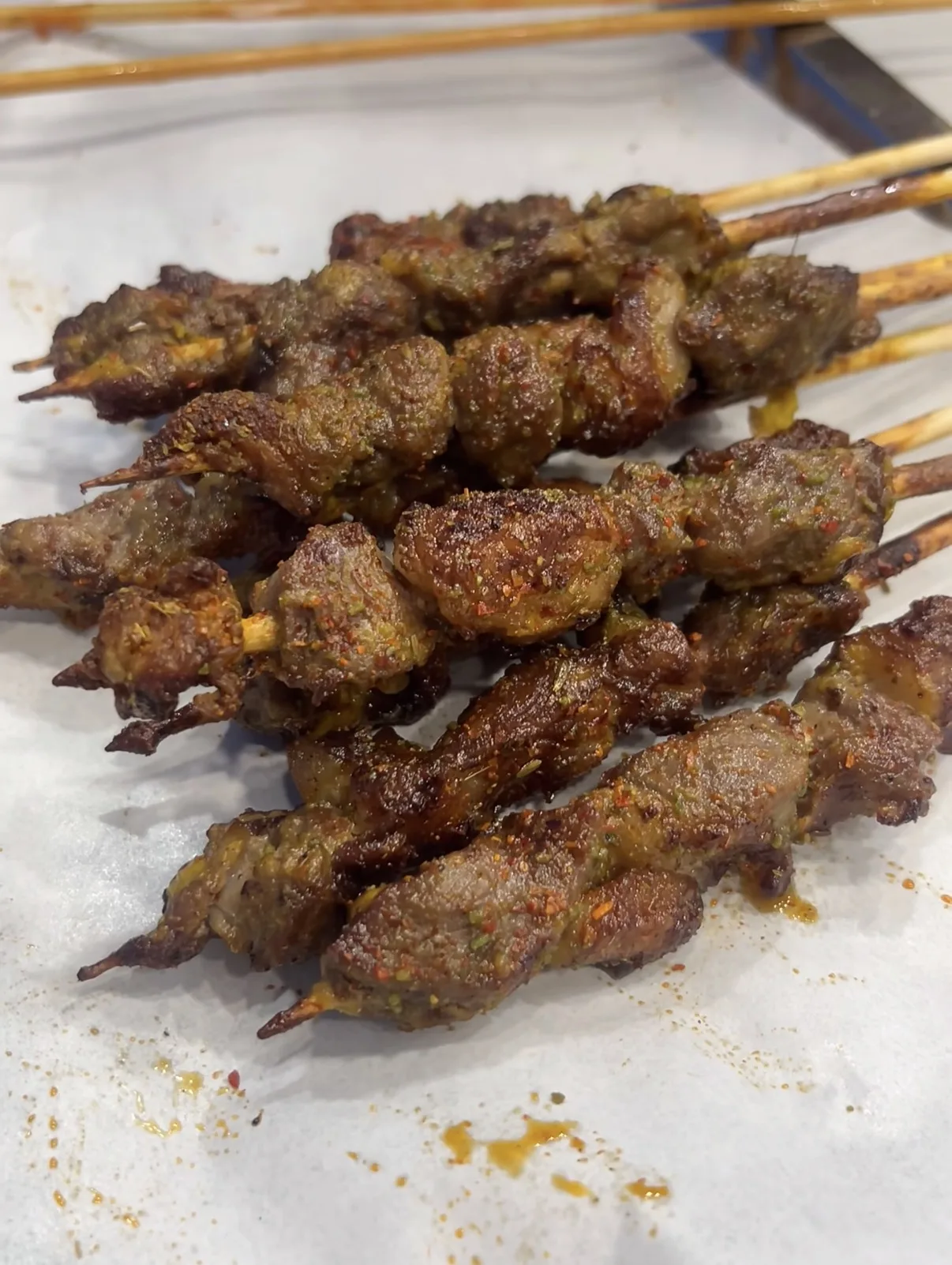
Xinjiang-style lamb skewers are popular in many parts of China. They are usually seasoned with cumin, chili, and salt, then grilled over heat. They are especially common in night markets, Xinjiang restaurants, and northwestern Chinese restaurants.
Big Plate Chicken
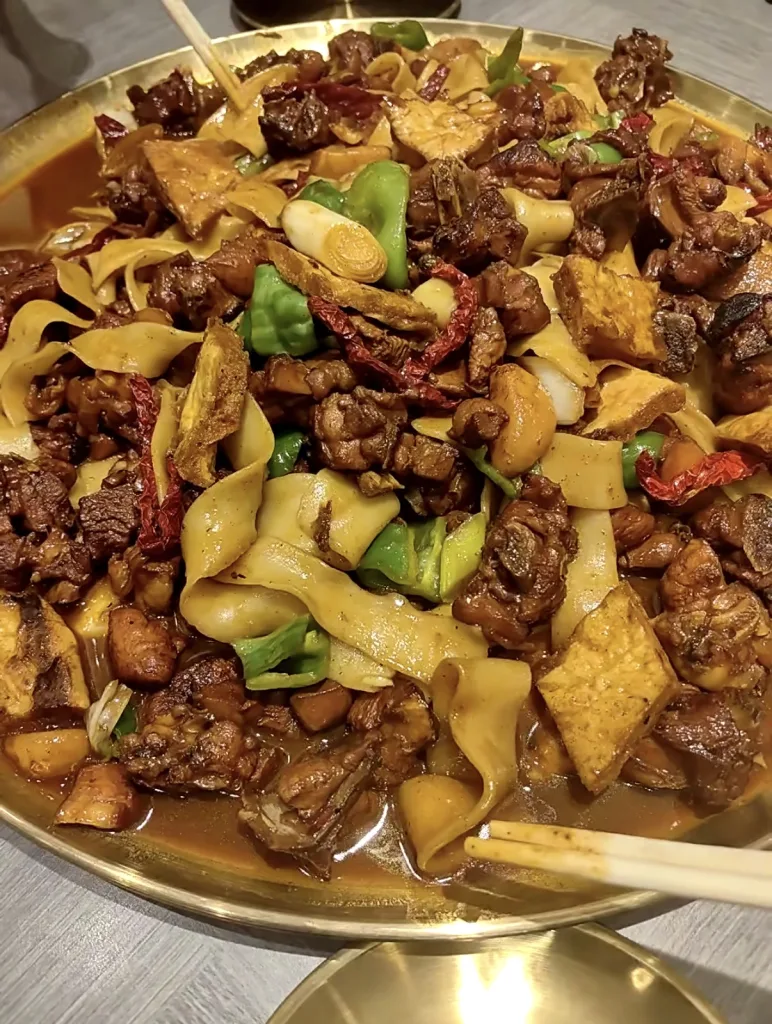
Big plate chicken, or 大盘鸡, is a famous Xinjiang-style dish made with chicken, potatoes, peppers, spices, and wide noodles. It is good for sharing, especially for families or small groups.
Yangrou Paomo
Yangrou paomo is one of the most famous local Muslim dishes. Guests break flatbread into small pieces, then the restaurant adds rich lamb or beef soup. It is warm, filling, and deeply connected with Xi’an’s food culture.
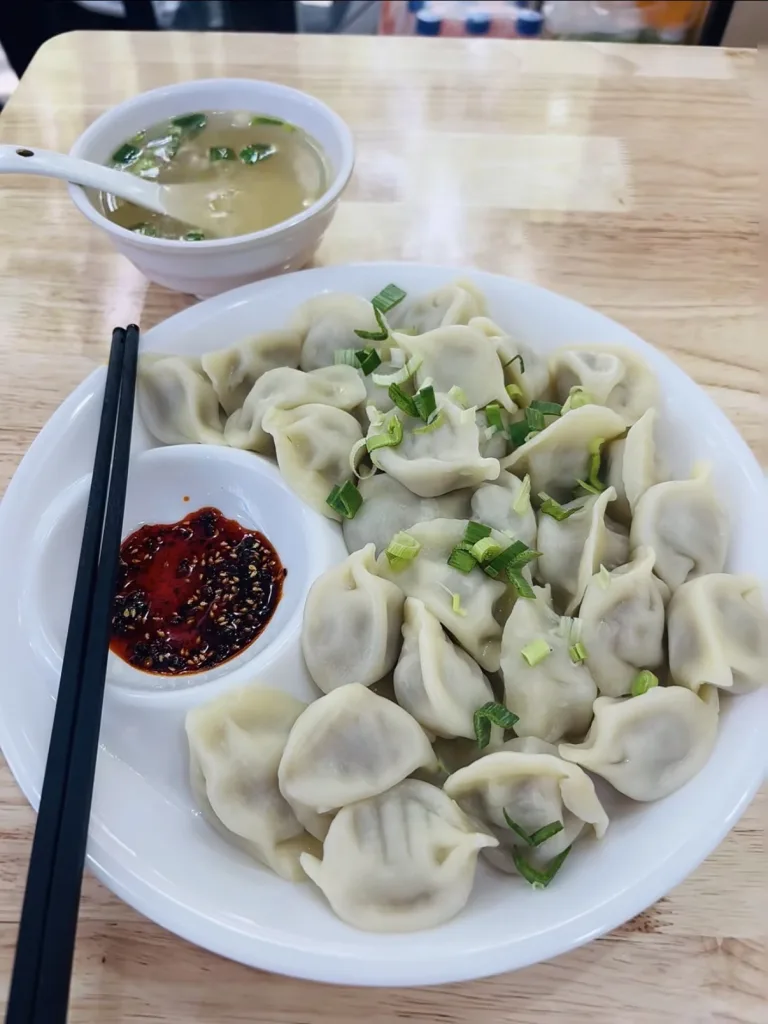
Beef or Lamb Dumplings
Some Qingzhen restaurants serve beef or lamb dumplings. However, do not assume all dumplings are suitable. In regular restaurants, pork is common, so choose a clear Qingzhen restaurant if you want dumplings.
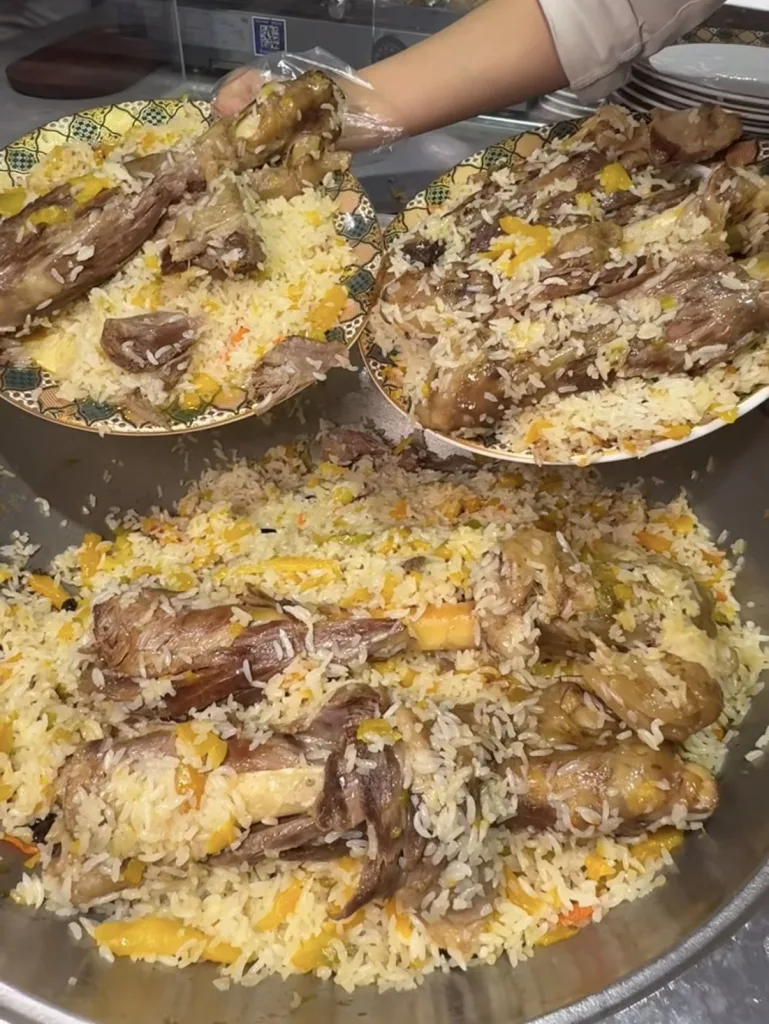
Uyghur Pilaf
Uyghur-style rice pilaf, often made with lamb, carrots, onions, and rice, is another comforting halal-friendly dish. It is especially common in Xinjiang restaurants.
Ingredients Muslim Travelers Should Watch Out For
Pork and Lard
Pork is very common in Chinese cuisine. Lard may also be used in pastries, noodles, stir-fries, and snacks. Even when a dish looks meat-free, it may still contain pork oil or pork broth.
Cooking Wine
Chinese cooking wine is often used in meat, seafood, sauces, and marinades. If you avoid alcohol in food preparation, you should ask in advance.
Soup Broth
Soup-based dishes can be tricky. A noodle soup may look simple, but the broth could contain pork bones, chicken, beef, seafood, or mixed ingredients.
Hotpot
Hotpot can be suitable if arranged carefully, but regular hotpot restaurants may use mixed broths, shared utensils, or non-halal meat. Muslim travelers should choose halal-friendly hotpot restaurants where possible.
Vegetarian Restaurants
Vegetarian food does not automatically mean halal. Some vegetarian restaurants may use cooking wine, and some may not fully understand halal requirements. Vegetarian meals can be useful, but they should not be treated as a guaranteed halal solution.
Can You Find Halal Food Near Major Tourist Attractions?
Sometimes yes, sometimes no.
This is one of the biggest misunderstandings about halal travel in China. A city may have halal restaurants, but that does not mean every attraction has halal food nearby.
For example:
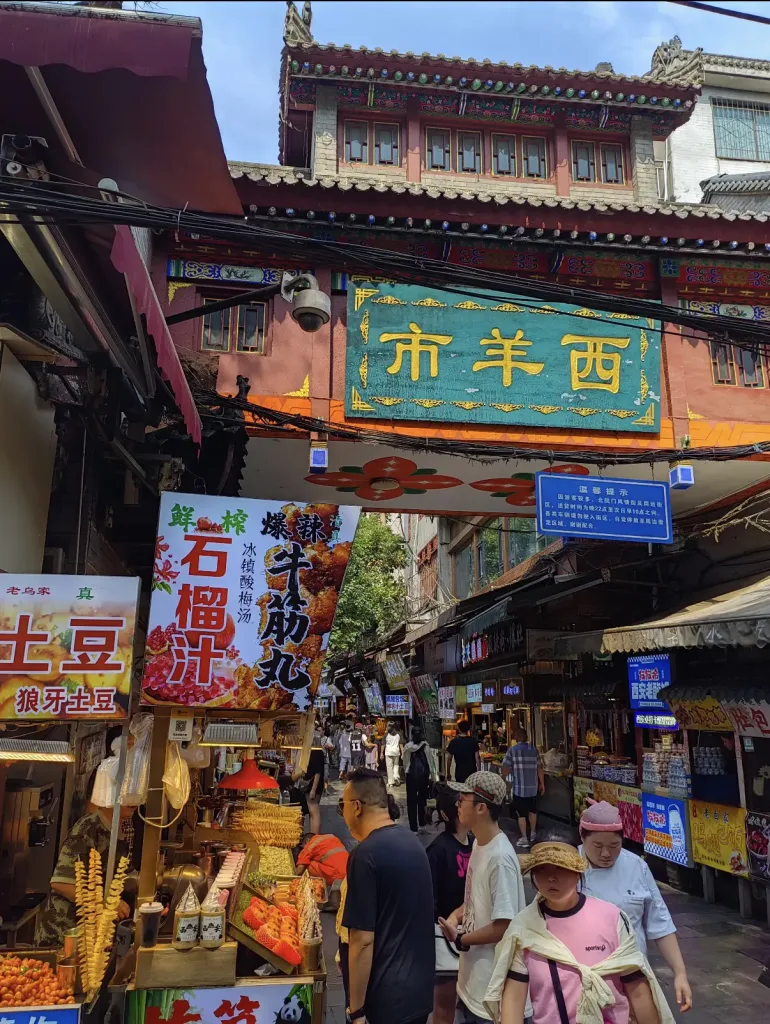
- In Xi’an, halal food is easy around the Muslim Quarter, but you still need to plan meals when visiting the Terracotta Warriors.
- In Beijing, Niujie is convenient for halal food, but it may not be near your Great Wall route.
- In Shanghai, halal options exist, but they may not be beside the Bund, Yu Garden, or Disneyland.
- In Hangzhou, halal food can be arranged, but not every scenic area around West Lake or Longjing tea village has immediate choices.
This is why route design matters.
For Muslim-friendly tours, we usually ask: Where will the guest be at lunchtime? How long is the drive? Is there a suitable restaurant nearby? Should lunch be before or after the attraction? Is the restaurant family-friendly? Can the group rest there comfortably?
A good halal-friendly itinerary is not just a list of restaurants. It is a smooth daily route where sightseeing, meals, prayer time, transportation, and family needs work together.
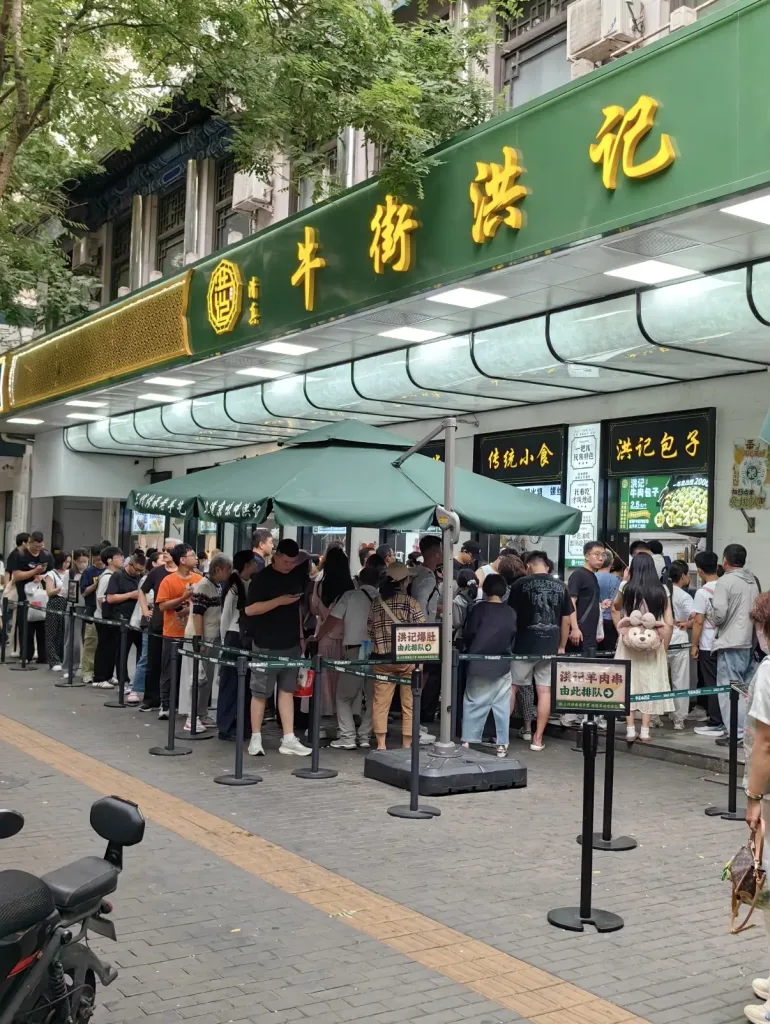
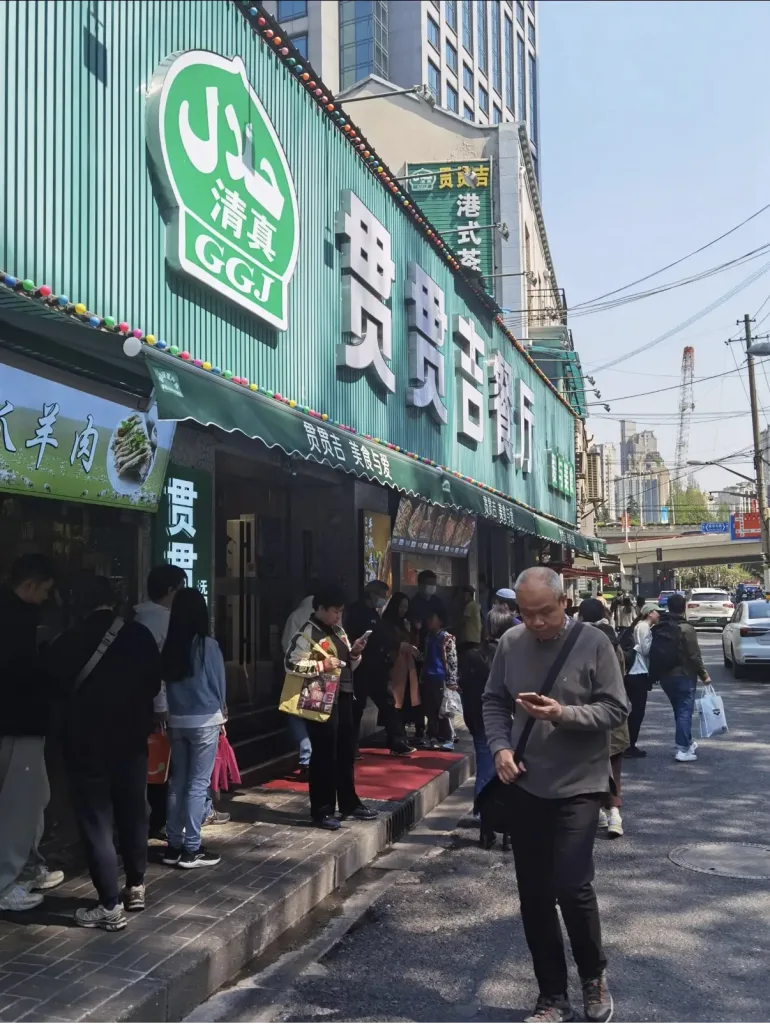
Can You Find International Halal-Friendly Restaurants in China?
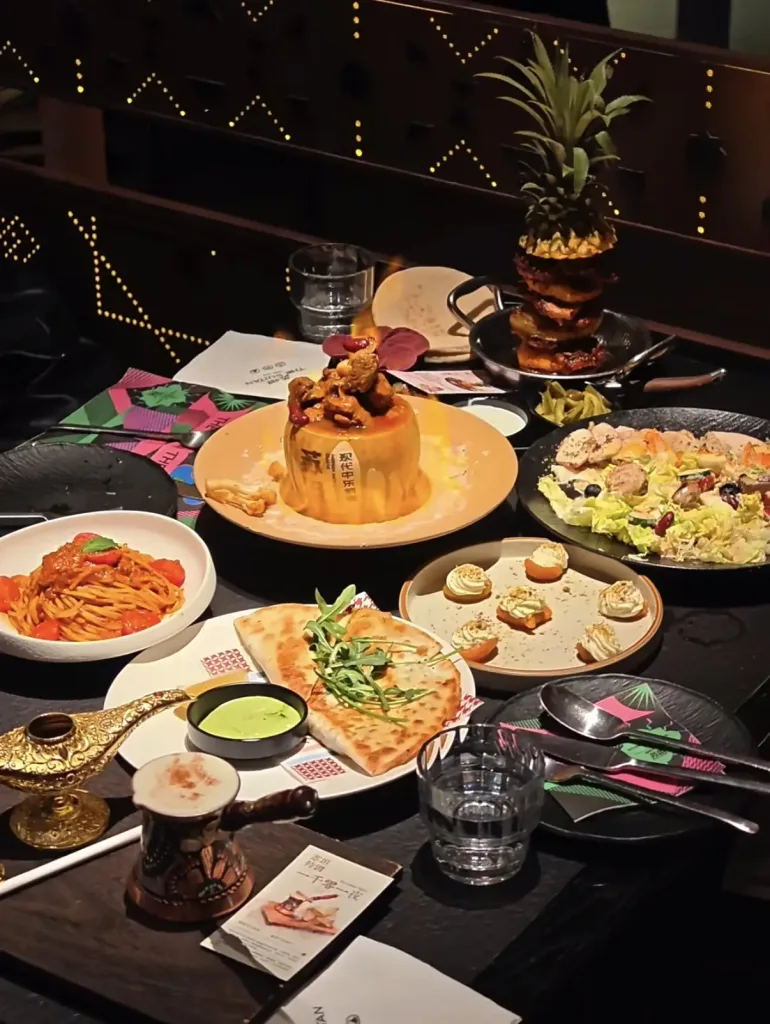
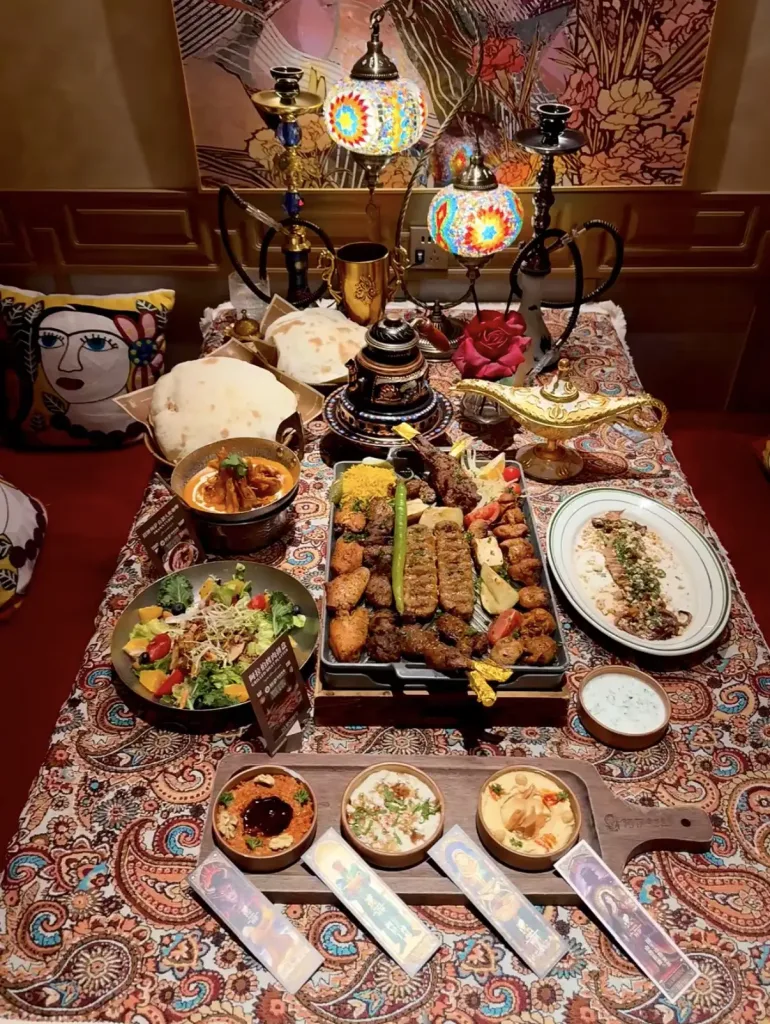
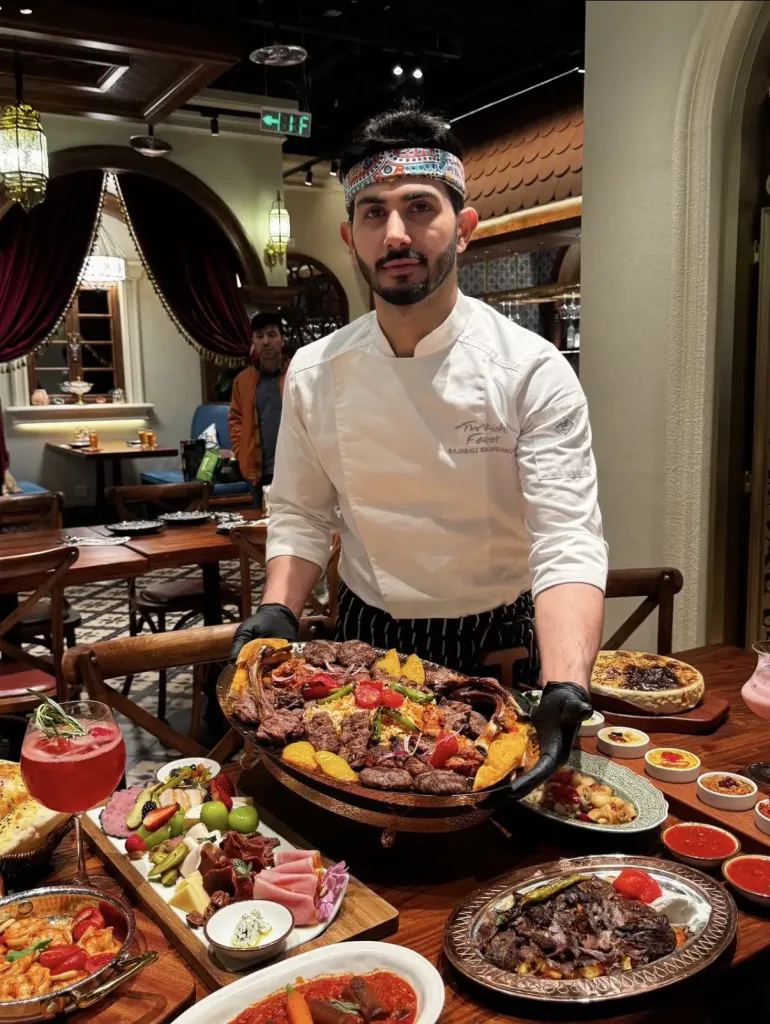
Many first-time visitors assume that halal food in China only means Chinese Muslim cuisine. In reality, several major cities also have a growing selection of international halal-friendly restaurants.
In cities such as Beijing, Shanghai, Guangzhou, and Xi’an, travelers can often find:
- Middle Eastern restaurants
- Turkish restaurants
- Pakistani restaurants
- Indian restaurants
- Uyghur restaurants
- Central Asian restaurants
- Some halal-friendly Southeast Asian restaurants
These restaurants are especially popular among business travelers, international students, expatriates, and Muslim visitors from the Middle East, Southeast Asia, Africa, and South Asia.
For example:
Beijing
Beijing has a long-established Muslim community and a wide variety of international dining options. In addition to traditional Chinese Muslim restaurants around Niujie, visitors can also find Turkish, Middle Eastern, Pakistani, and Central Asian restaurants in several international districts.
Shanghai
As China’s most international city, Shanghai offers one of the largest selections of foreign halal-friendly restaurants. Travelers can find Turkish kebabs, Middle Eastern grills, Indian curries, Pakistani cuisine, and international halal dining near major commercial areas.
For some visitors, especially families with children, mixing Chinese food experiences with familiar international meals can make the trip more comfortable and enjoyable.
For more details, see our full guide to halal food in Shanghai.
Guangzhou
Guangzhou is particularly popular among Muslim business travelers. Areas such as Xiaobei are known for their international atmosphere and offer a large concentration of Middle Eastern, Turkish, African, and South Asian restaurants.
Many visitors attending the Canton Fair specifically choose hotels near these neighborhoods because halal-friendly dining is easier to access.
Hangzhou
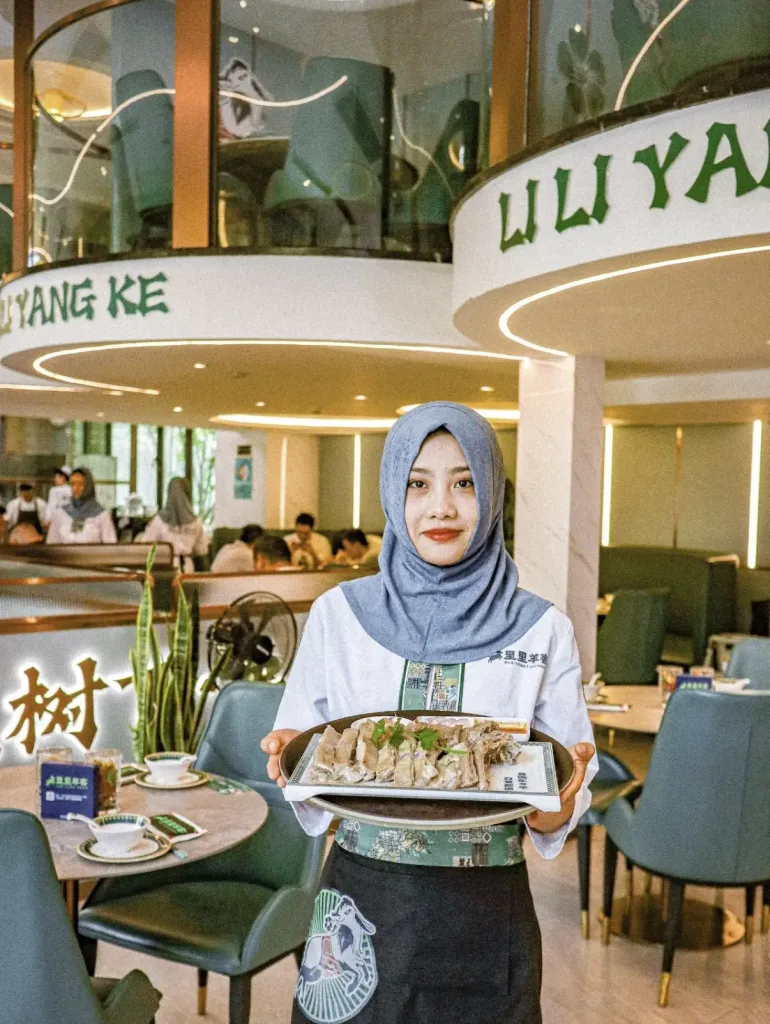
While Hangzhou is best known for West Lake, tea villages, and classic Jiangnan scenery, it also has a practical halal food scene for Muslim travelers. The easiest area to start is around Yangbatou and Zhongshan Middle Road, close to Phoenix Mosque, Southern Song Imperial Street, Hefang Street, and West Lake.
Here, you can find local halal snacks, Northwest Chinese dishes, Turkish grills, Middle Eastern restaurants, and Muslim-friendly international options that fit naturally into a Hangzhou sightseeing route.
For more details, see our full guide to halal food in Hangzhou.
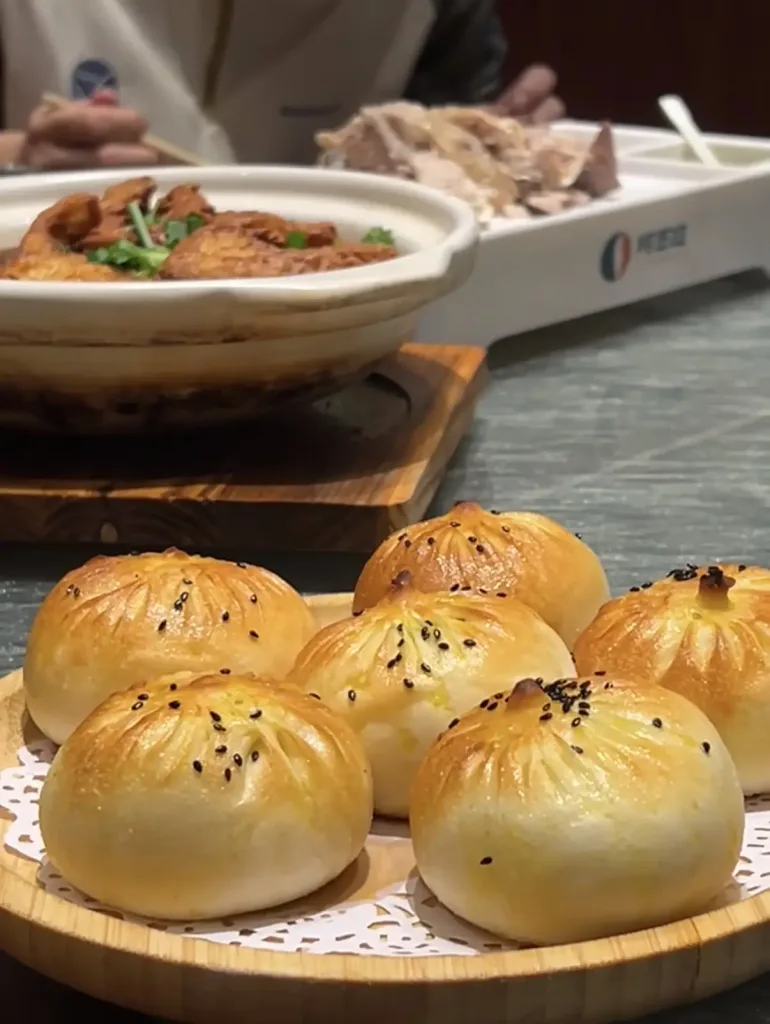
Best Cities in China for Halal Food
Some Chinese cities are much easier for Muslim travelers than others. If halal food is a major priority, you should consider including one or more of these cities in your itinerary.
Xi’an
Xi’an is one of the best cities in China for Muslim travelers. The city has a famous Muslim Quarter, a long Silk Road history, and many local dishes based on beef, lamb, noodles, and breads.
The Muslim Quarter is especially popular for food exploration. It is located near the Bell Tower and Drum Tower area, making it easy to include in a classic Xi’an itinerary. For background information, you can check the Shaanxi government’s page about the Muslim Quarter here: Shaanxi Government — Muslim Quarter.
Xi’an is a strong choice for travelers who want both history and Muslim-friendly food. You can visit the Terracotta Warriors during the day and explore the Muslim Quarter in the evening.
Beijing
Beijing is another important city for Muslim travelers, especially first-time visitors. The city has world-famous attractions such as the Forbidden City, Temple of Heaven, Summer Palace, and the Great Wall. It also has historic Muslim communities and halal-friendly dining areas.
Niujie is one of the best-known Muslim areas in Beijing. It is home to Niujie Mosque, one of Beijing’s oldest mosques. For historical background, you can check the Beijing government’s official page here: Beijing Government — Niujie Mosque.
For Muslim travelers, Beijing usually requires smart route planning. For example, a Great Wall day trip may not have many suitable meal options near the mountain area, so lunch may need to be arranged before or after the visit.
Guangzhou
Guangzhou is especially useful for business travelers, Canton Fair visitors, Middle Eastern travelers, African traders, and Southeast Asian Muslim visitors. Areas such as Xiaobei and parts of Yuexiu are known for international restaurants, Middle Eastern food, Turkish food, African food, Xinjiang food, and Muslim-friendly dining options.
Guangzhou can work well for travelers who want to combine city sightseeing, wholesale markets, Cantonese culture, shopping, and halal-friendly meals.
Shanghai
Shanghai is an international city and a common first stop for foreign visitors to China. Halal food is available, but it can be more spread out compared with Xi’an or Beijing. This means planning is important.
If your itinerary includes the Bund, Yu Garden, French Concession, Shanghai Tower, Shanghai Disneyland, or a family-friendly city tour, meals should be arranged based on location and timing. Shanghai is very convenient for transportation, but you may not want to cross the city just for lunch during a packed sightseeing day.
Hangzhou
Hangzhou is a beautiful city for Muslim travelers who want a softer, slower experience. West Lake, Longjing tea village, traditional neighborhoods, and garden-style scenery make Hangzhou a good choice for couples, families, and guests who prefer a relaxed pace.
Halal food is available in Hangzhou, but not everywhere. If you are visiting West Lake, Longjing tea fields, Lingyin area, or the Grand Canal, meal planning should be done in advance. For private tours, we can help arrange a halal-friendly lunch or dinner that fits the day’s route.
Chengdu and Chongqing
Chengdu and Chongqing are famous for spicy food and hotpot. Muslim-friendly restaurants exist, but travelers need to be extra careful because pork, animal oil, and cooking wine are common in Sichuan-style cooking.
If you want to visit these cities as a Muslim traveler, it is better to plan restaurants carefully instead of randomly choosing local hotpot or street food.
Ningxia, Gansu, and Xinjiang
For travelers interested in deeper Muslim culture, northwestern China offers a very different experience. Cities and regions such as Lanzhou, Yinchuan, Urumqi, and Kashgar have stronger connections with Muslim food traditions. However, these areas may require more travel time and more careful route planning, especially for first-time visitors.
Useful Chinese Phrases for Muslim Travelers
Here are some useful phrases you can show to restaurant staff.
Do you serve halal food?
请问这里是清真的吗?
Qǐngwèn zhèlǐ shì qīngzhēn de ma?
Do you use pork or lard?
请问这里用猪肉或者猪油吗?
Qǐngwèn zhèlǐ yòng zhūròu huòzhě zhūyóu ma?
I do not eat pork.
我不吃猪肉。
Wǒ bù chī zhūròu.
I do not eat pork, lard, or food cooked with alcohol.
我不吃猪肉、猪油,也不吃用酒做的菜。
Wǒ bù chī zhūròu, zhūyóu, yě bù chī yòng jiǔ zuò de cài.
Could you please help me confirm if this is suitable for Muslim guests?
请帮我确认一下,这个适合穆斯林客人吃吗?
Qǐng bāng wǒ quèrèn yíxià, zhège shìhé Mùsīlín kèrén chī ma?
These phrases are helpful, but language alone may not solve every issue. In some restaurants, staff may not fully understand halal requirements beyond “no pork.” If you are strict about cross-contamination, cooking wine, or separate utensils, choose Qingzhen restaurants rather than regular restaurants.
Muslim-Friendly Travel Tips for China
1. Do Not Leave Every Meal to Chance
It may be possible to find something at the last minute, but this can waste time and energy. For a smoother trip, plan at least lunch and dinner locations before each travel day.
2. Stay Near Convenient Transportation
If halal food is important, stay in areas with good metro or car access. In large Chinese cities, distance can matter a lot. A restaurant may look close on the map but still take 30–60 minutes to reach depending on traffic.
3. Be Careful with Street Food
Street food can be delicious, but it is harder to confirm ingredients and cooking methods. In Muslim areas such as Xi’an’s Muslim Quarter, street food is easier to navigate, but in ordinary tourist markets, be more careful.
4. Prepare Chinese Food Phrases
Save the Chinese phrases in this article as screenshots. They can help when ordering or asking questions.
5. Consider a Private Guide for Complex Days
A private guide can help communicate with restaurants, confirm ingredients, adjust timing, and prevent unnecessary stress. This is especially useful in Beijing, Shanghai, Hangzhou, and multi-city trips.
6. Plan Prayer Time Flexibly
China has mosques in many major cities, but they may not always be close to your sightseeing route. If prayer time is important during the day, include it in the itinerary planning rather than treating it as an afterthought.
7. Double-Check During Ramadan
If you are traveling during Ramadan, meal timing becomes even more important. Some restaurants may close early, some may be very busy around certain times, and hotel breakfast may not fit your schedule. Private itinerary planning is strongly recommended.
Can We Arrange Halal-Friendly Tours in China?
Yes. Chinaloveforyou can help Muslim travelers plan private, halal-friendly trips in China.
We can help with:
- halal-friendly restaurant planning
- private car and driver arrangements
- English-speaking guides
- family-friendly pacing
- prayer-time flexibility
- high-speed train planning
- airport and train station transfers
- sightseeing routes that avoid unnecessary backtracking
- restaurant verification before the trip
- customized routes for Beijing, Xi’an, Shanghai, Hangzhou, Guangzhou, and more
Our goal is not just to “find a halal restaurant.” Our goal is to make the whole travel day feel smooth, comfortable, and culturally meaningful.
For example, if you are visiting the Great Wall, we help decide whether it is better to eat before departure, after returning to the city, or at a verified restaurant along the way. If you are visiting West Lake and Longjing tea village in Hangzhou, we help arrange a route where the scenery, tea experience, transport, and halal-friendly meals fit together naturally.
For families, we also consider children’s energy levels, bathroom stops, stroller convenience, meal timing, and avoiding overly packed schedules.
FAQs: Halal Food in China
Is halal food easy to find in China?
It depends on the city. In Xi’an, Beijing, Guangzhou, Shanghai, and Hangzhou, halal-friendly options are available, but they are not always near every attraction. In smaller towns and rural areas, halal food can be harder to find.
What is halal food called in Chinese?
Halal food is commonly called 清真, pronounced qīng zhēn.
Is every restaurant with beef or lamb halal?
No. A restaurant serving beef or lamb is not automatically halal. It may still use pork, lard, cooking wine, or shared equipment. Look for Qingzhen restaurants or confirm in advance.
Is vegetarian food in China halal?
Not always. Vegetarian food may still contain cooking wine or be prepared in a non-halal kitchen. It can be helpful, but it is not a guaranteed halal solution.
Which city in China is best for halal food?
Xi’an is one of the best cities for Muslim travelers because of its Muslim Quarter, Silk Road history, and strong local Muslim food culture. Beijing, Guangzhou, Shanghai, and Hangzhou can also work well with proper planning.
Can I find halal food near the Great Wall?
It depends on the section of the Great Wall and your route. Some areas have limited food choices, so it is better to arrange lunch before or after the visit.
Can I travel to China during Ramadan?
Yes, but meal timing and restaurant planning become more important. You may need early breakfast arrangements, suitable dinner locations, and a flexible sightseeing schedule.
Can Chinaloveforyou arrange a Muslim-friendly China itinerary?
Yes. We can arrange private halal-friendly China tours with restaurant planning, guides, private transport, prayer-time flexibility, and family-friendly pacing.