
Beyond Beijing: A 3-Day Local Guide to Datong’s Buddhist Art & Architecture
As a travel planner who’s guided countless journeys across China, I can tell you this: Datong’s magic lies in a rare balance—monumental grandeur paired with intricate craftsmanship. You’ll see it everywhere: towering stone Buddhas with serene expressions, delicate wooden structures built without nails, and temples that seem to defy gravity.
And here’s the twist that surprises most travelers—Datong is incredibly approachable. One moment you’re standing before ancient relics of empires long gone, and the next, you’re holding a steaming bowl of noodles in a lively street. It’s what makes Datong popular and unforgettable.

written by Angie
Senior Travel Planner | Local China Expert
Updated 2026.04.17
Day 1 – The Periphery: Datong’s Iconic Wonders
If you’re short on time or prefer convenience, start with a guided day tour.
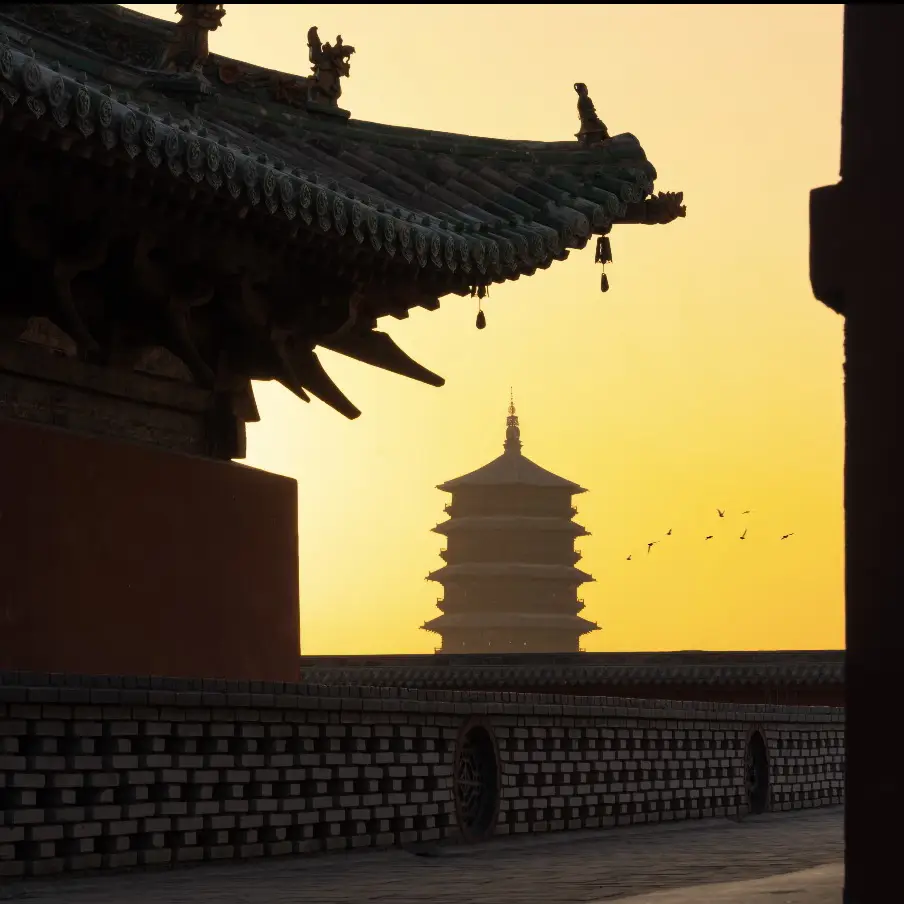
Yingxian Wood Pagoda (The “Lego” of Ancient China)
Built in 1056 (Liao Dynasty), this 67-meter pagoda is nearly 1,000 years old. It is the oldest and tallest pure wooden multi-story structure in the world—built entirely without a single nail.
- What to look for: The “Museum of Bracket Sets” (Dougong). It uses 54 different types of bracket sets that act like Lego blocks, absorbing earthquake energy.
- My suggestion: You can only enter the first floor now as the upper levels have tilted past the safety line. See it while you still can; it’s a “watch it before it’s gone” treasure.
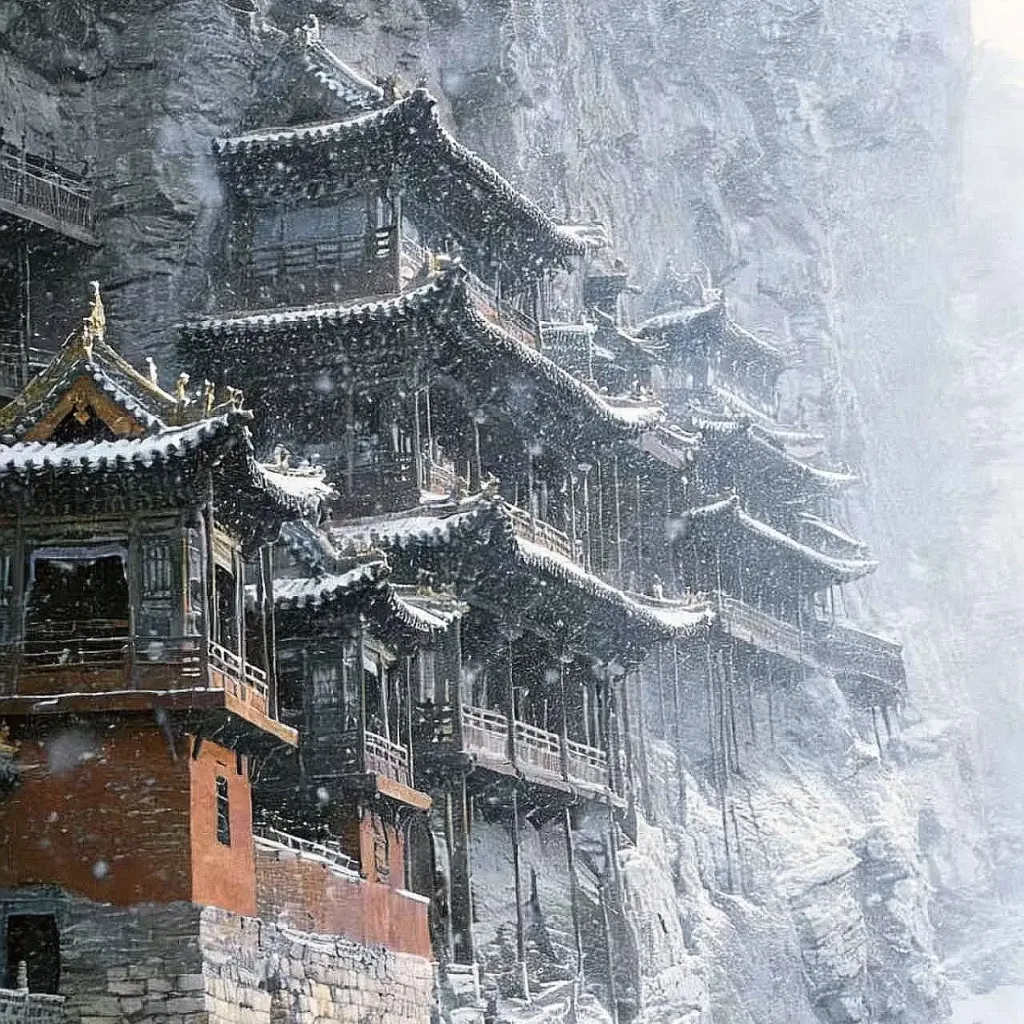
2. Hanging Temple (The Architecture on the Abyss)
The temple is literally embedded into the cliffs of Cuiping Peak, 50 meters above the ground.
- The Experience: Walking on the narrow wooden stairs with low railings made my palms sweat! It looks like it’s supported by thin poles, but those are actually “placebos”—the real weight is carried by crossbeams hammered deep into the rock.
- Local Soul: I thought of the famous 70-year-old guide in China, Mr. Zhu Menglin, who climbs these stairs every day to share this history. It’s a testament to how locals protect this land.
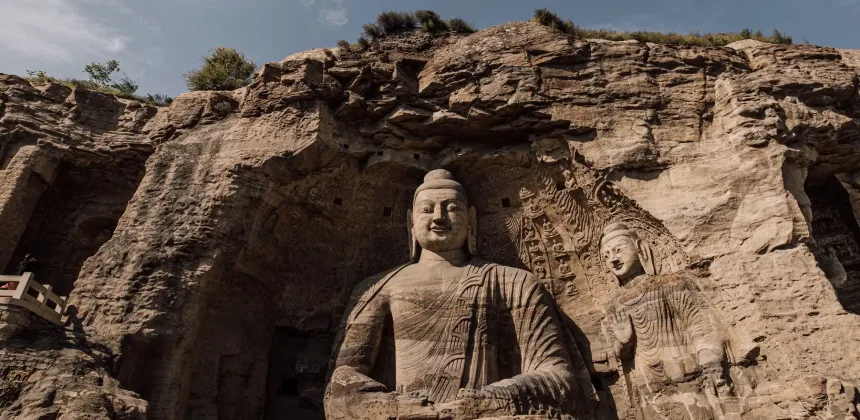
3. Yungang Grottoes (The Grand Finale)
A UNESCO World Heritage site with over 51,000 statues.
- The Vibe: Visiting in the snow was better than a sunny day. The snow resting on the shoulders of the Cave 20 Open-air Buddha (13.7m tall) felt incredibly peaceful.
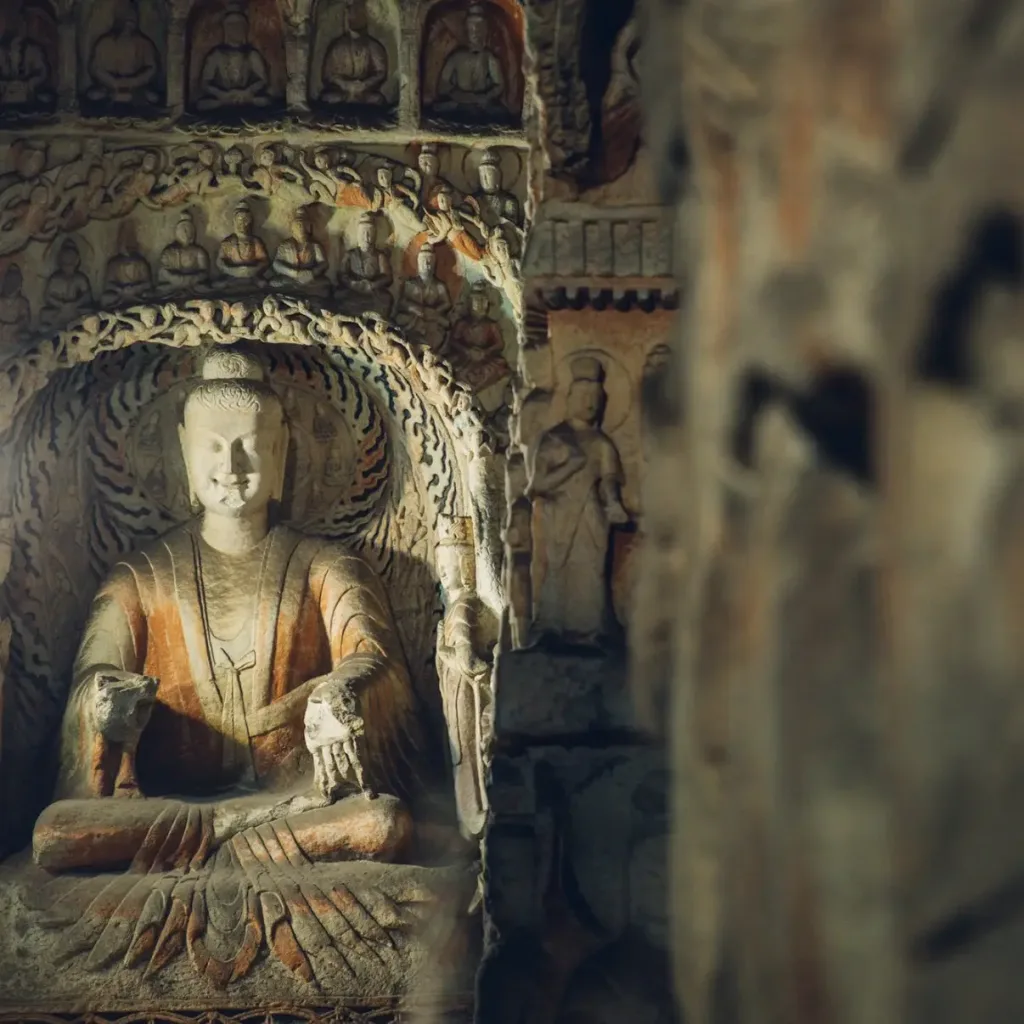
- Don’t Miss: Cave 12, the “Music Cave,” featuring 47 ancient musical instruments carved into the stone—some of which are now extinct.
Day 2 – Walking Through the City
Datong’s downtown is compact, and these three temples are within walking distance of each other.
1. Huayan Temple (The East-Facing Giant)
Unlike most Chinese temples that face south, this one faces East, reflecting the Khitan people’s (Liao Dynasty) tradition of sun worship.
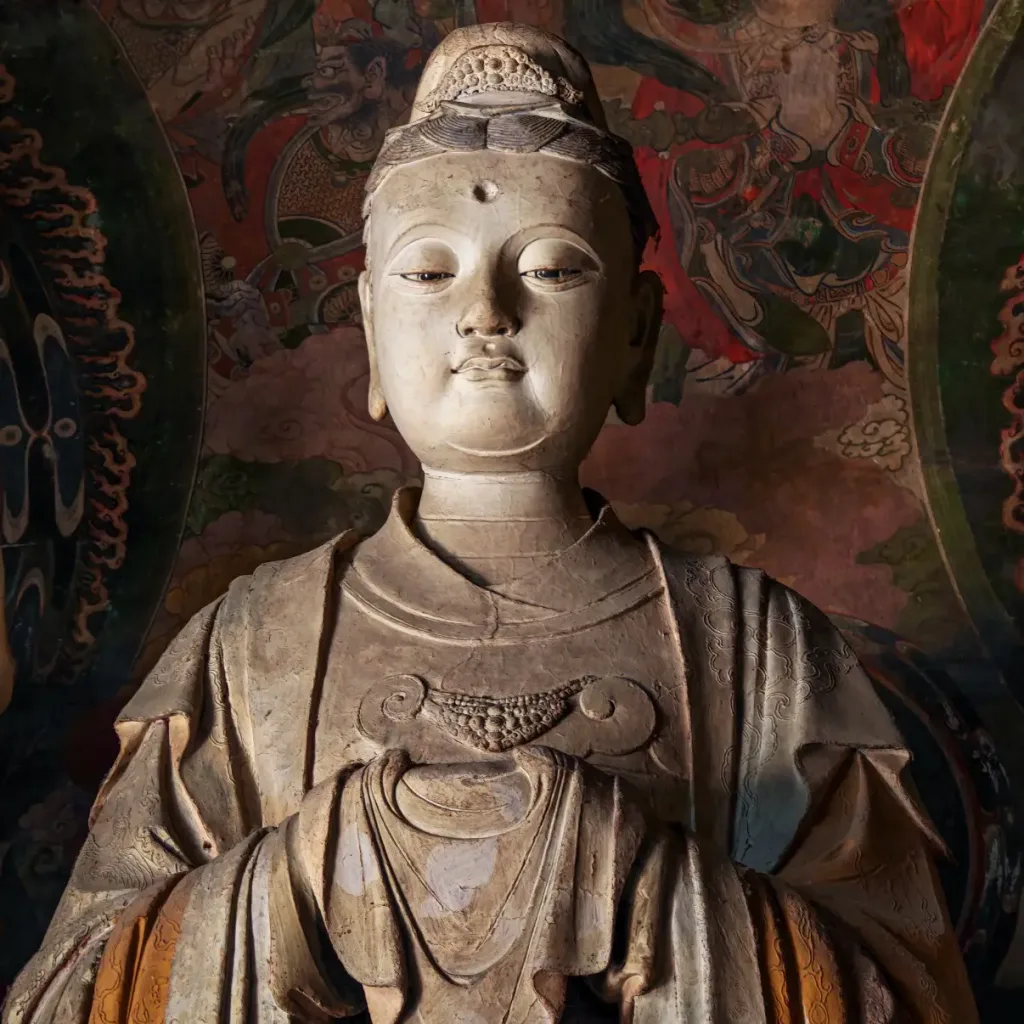
- The Highlight: The 合掌露齿菩萨 (Samanthabhadra with a bared-tooth smile) in the lower temple. Known as the “Venus of the East,” her smile isn’t a distant, cold deity’s look—it’s the warm, relatable smile of a girl next door.
2. Shanhua Temple (The Silent Beauty)
Locals call it the “South Temple.” It’s much quieter than Huayan.
- The Experience: In the off-season, the silence was so deep I could hear my footsteps in the snow.
- Look Closer: The statues of the Twenty-four Devas are incredibly lifelike. They don’t look like gods; they look like real people—old, young, angry, and laughing.
3. Guandi Temple (A Local’s Devotion)
A small Yuan Dynasty temple dedicated to Guan Yu. It’s where you see the real Datong—locals coming in for a quick prayer, bowing, and going about their day. It’s efficient, loyal, and very “Shanxi.”
Day 3: History & City Lights (Datong Museum & Ancient City)
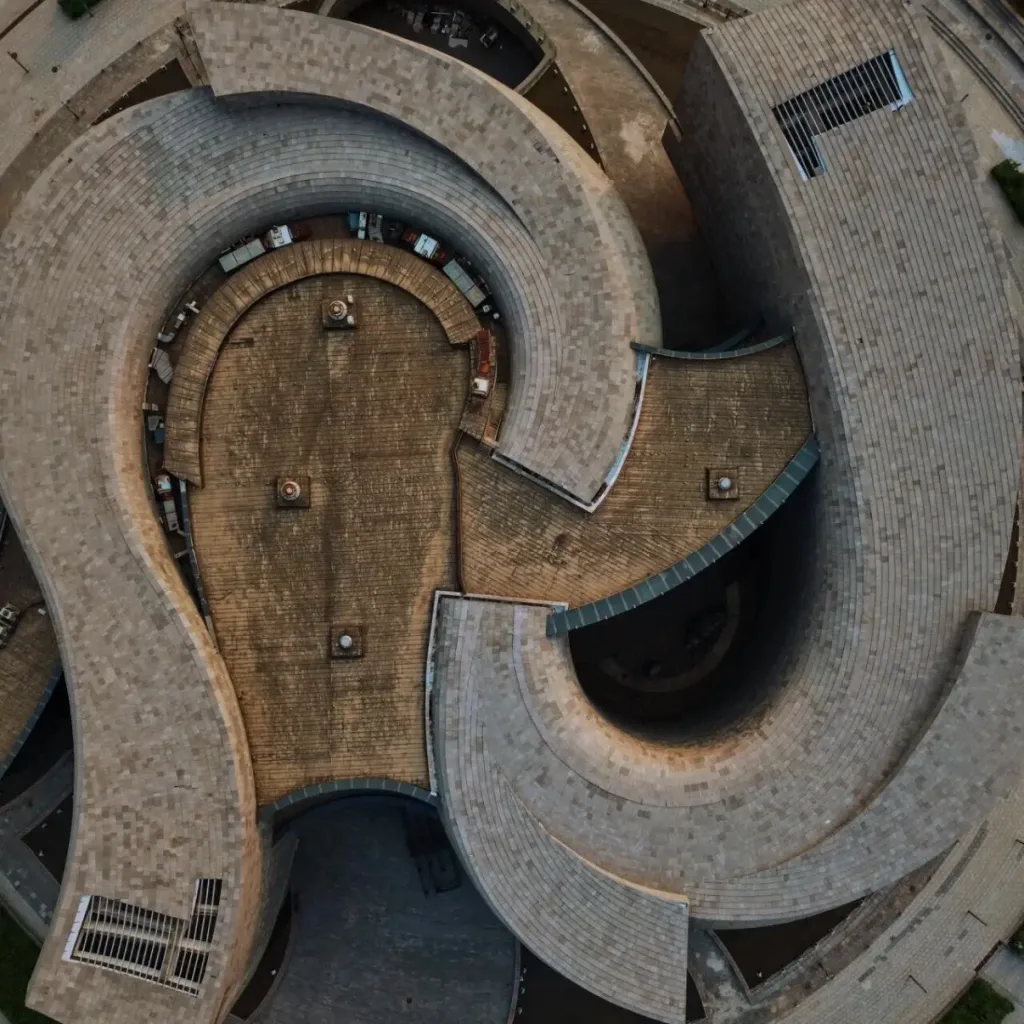
1. Datong Museum (The Northern Wei Powerhouse)
This is a Grade-1 National Museum. If you want to understand how nomadic “barbarians” and Han Chinese merged into one culture, this is the place.
- Must See: The “Terracotta Army” of Northern Wei—hundreds of cavalry and warrior figurines standing behind glass, staring you down.
- The “Vibe”: From the Persian-style glassware to the rugged Liao ceramics, you can feel that Datong was once a truly international metropolis on the Silk Road.
2. Datong Ancient City (A Night Walk)
I recommend visiting the Ancient City at night when the lights come on.
- My discovery: I wandered into “Renyi Alley” (仁义巷). The old bricks and polished stone slabs is true old Chinese style.
- The Thought: Standing on the wall, I realized: the wood is still here, the stones are still here, and the wind blowing today is the same wind that blew a thousand years ago.
Other tips for datong
- The Food: After the grottoes, grab a steaming bowl of Dao Xiao Mian (Sliced Noodles). It’s the ultimate comfort food that turns “frontier history” into a warm belly.
- The Terms: Keep an eye out for ”Chiwen” (the dragon-fish on roofs to prevent fire) and ”Zaojing” (the mesmerizing “well” ceilings). They are the hidden gems of Chinese architecture.